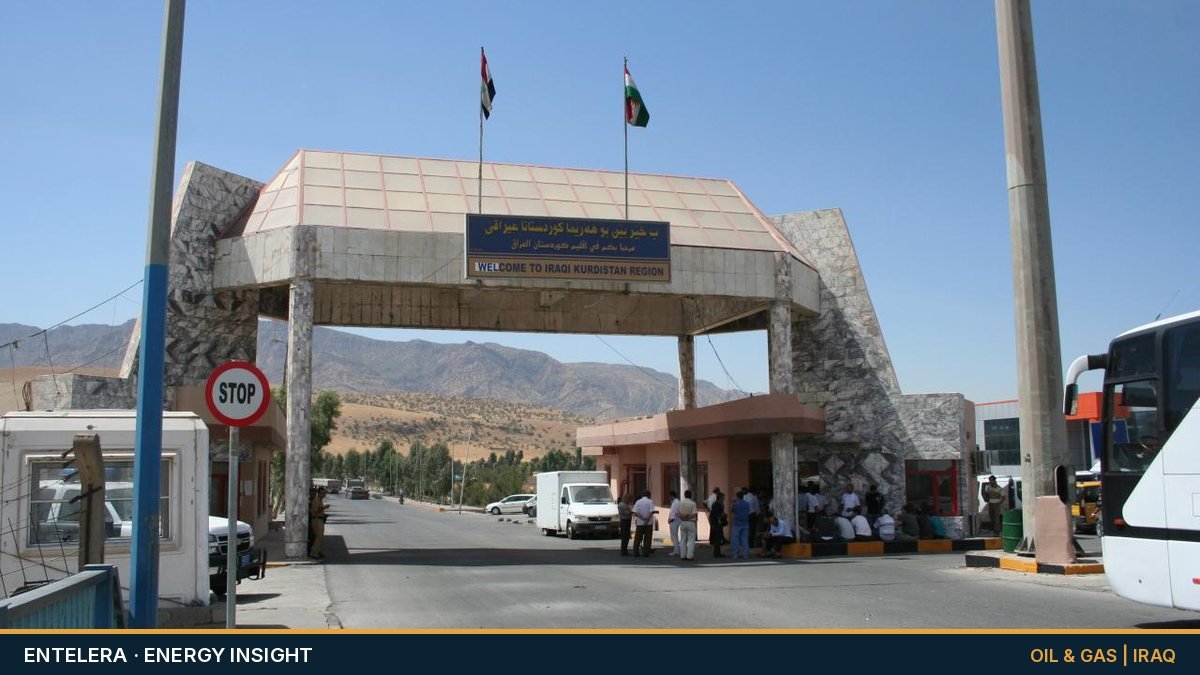
Iraq Kurdistan oilfields came under a direct federal claim on Tuesday. On 24 November 2026, Prime Minister Ali al-Zaidi ordered the federal Oil Ministry to run fields under Kurdish security control. The order covers four provinces: Diyala, Kirkuk, Salahaddin and Nineveh. He also told the Kurdistan Regional Government (KRG) to approve crude and product exports only through the Oil Ministry. In addition, he put all of the region’s border crossings under the federal Border Ports Authority.
What Baghdad ordered for Iraq Kurdistan oilfields
The directives followed a committee report on suspected oil smuggling at the state-owned North Oil Company. Military spokesperson Sabah al-Numan announced them. As a result, al-Zaidi suspended the company’s director general and deputies pending an investigation. He also removed the head of the border crossings authority, according to Iraq’s state news agency.
Under the orders, the Energy Police will take control of oilfields across the country and watch them with cameras. That includes fields inside federal boundaries where Kurdish forces provide security. Meanwhile, the Border Forces Command must close unofficial crossings on Iraq’s international borders, including those in the Kurdistan Region. Federal troops will also shut informal roads linking the region to the four provinces.
Moreover, Oil Ministry staff and Energy Police will man checkpoints on the roads into Erbil, Sulaimani and Duhok. New laboratories there will test fuel bound for those provinces. Every operating well will also get electronic flow gauges, and a digital system will watch pipelines for theft. Finally, the industry ministry has six months to move oxidised asphalt and naphtha plants that sit outside federal security control.
According to The National, no prime minister has taken such steps against the region since the 2003 US-led invasion. That makes the fight over Iraq Kurdistan oilfields a sharp break with past practice.
Erbil rejects Baghdad’s claim on Iraq Kurdistan oilfields
Kurdistan Region Prime Minister Masrour Barzani quickly rejected the move. He said the statement “goes against the talks we have held with Baghdad’s authorities”. Speaking to reporters in Erbil, Barzani also called the orders “baffling” and “in no way acceptable”.
Barzani had met al-Zaidi in Baghdad on 9 November 2026. At that meeting, the two sides discussed running the fields under the constitution. Likewise, the KDP and the PUK, the region’s two ruling parties, called the step “unexpected and surprising”.
The legal fight is old. Iraq still has no federal oil and gas law. Article 112 of the 2005 constitution gives Baghdad and producing regions joint control of “present fields”. Erbil, however, argues that later finds belong to it. Furthermore, the Federal Supreme Court struck down the KRG’s oil law in 2022, a ruling Erbil rejected.
Why it matters for northern Iraqi crude
Baghdad already oversees Kurdish exports through Turkey, with the money going to the federal treasury. However, a dispute over Kurdish sales without Baghdad’s approval halted pipeline shipments to Turkey for more than two years. The two sides only agreed in September 2025 to restart them. We covered the restart of Kirkuk-Ceyhan pipeline exports on 18 November 2026.
For traders, the risk sits in that northern barrel. Iraq pumped 4.6 mmbbl/d of crude in October 2026, its highest in seven years, the IEA said. So a stand-off over Iraq Kurdistan oilfields could squeeze sour supply into the Mediterranean just as Gulf flows recover. We looked at that spread in our analysis of Kirkuk crude exports and Mediterranean sour.
What to watch next for Iraq Kurdistan oilfields
First, watch whether federal forces actually move onto fields guarded by Kurdish units. Second, watch Ceyhan loadings and any change in SOMO’s export approvals. Finally, Kurdish moves at the crossings with Turkey and Iran will show if this stays a legal fight.
For a deeper analysis, read: Kurdistan Oilfields: What Baghdad’s Takeover Means for Ceyhan and Traders
Sources
- Rudaw: Zaidi orders federal takeover of Kurdistan Region border crossings, oilfields under Kurdish security control
- The National: Iraqi PM orders federal takeover of Kurdistan oil exports, border crossings and oilfields in disputed areas
- Al Jazeera: Iraq orders takeover of oilfields in areas under Kurdish control
- Rudaw: Kurdistan Region PM rejects Baghdad’s move to centralise oilfields, border control
- Seoul Economic Daily: IEA Sees First Oil Surplus Since War in Fourth Quarter