The Belgium nuclear takeover talks have reached a critical point. On 27 October, De Tijd and L’Echo reported that the government has drafted a law to nationalise Engie’s Belgian reactors. It would use that law only if talks miss their 4 November deadline. The offices of the prime minister and the energy minister declined to confirm the plan.
This analysis looks at the number behind the deadlock, and at what each side wants from the reactors.
The money behind the Belgium nuclear takeover
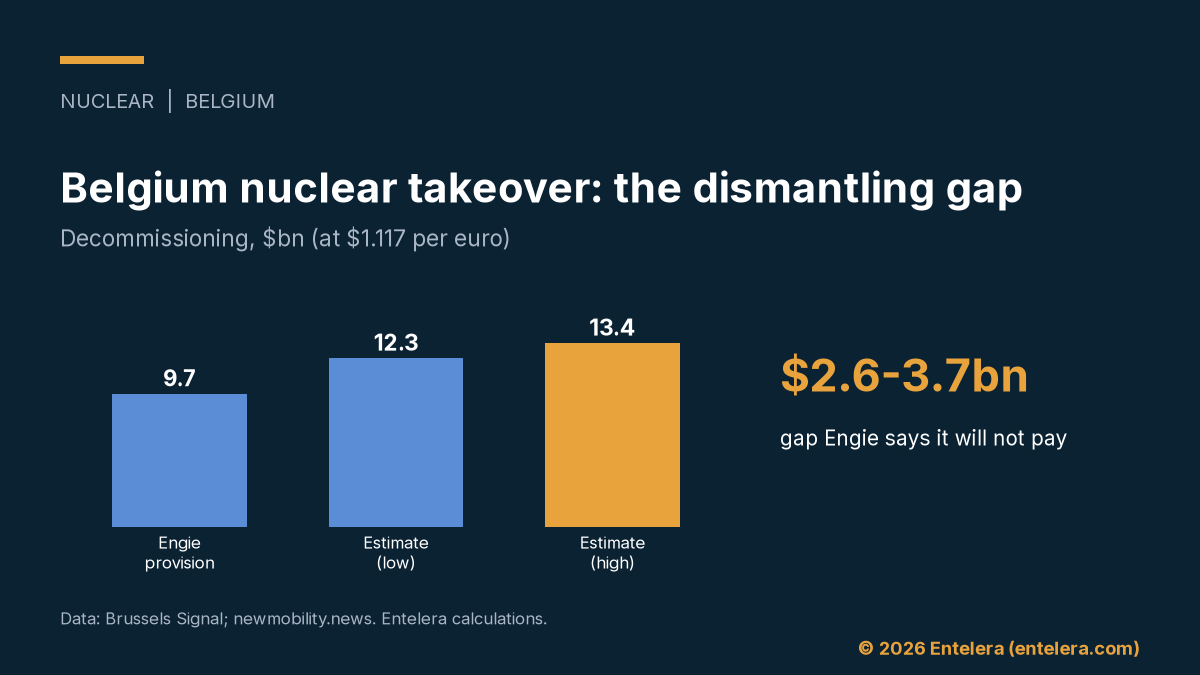
Since April, the state and Engie have negotiated a takeover of all seven reactors at Doel and Tihange. The deal covers staff, assets and the bill for dismantling the plants. That bill is the problem. Estimates put it at €11-12bn ($12.3-13.4bn). By contrast, Engie has set aside €8.7bn ($9.7bn) and says it will not pay more.
Therefore, the gap is about €2.3-3.3bn ($2.6-3.7bn), on our estimate. Whoever takes the reactors also takes the risk that costs rise further. For comparison, Engie agreed in 2023 to pay €15bn ($16.8bn) to hand its nuclear waste obligations to the state.
Why Belgium wants the reactors
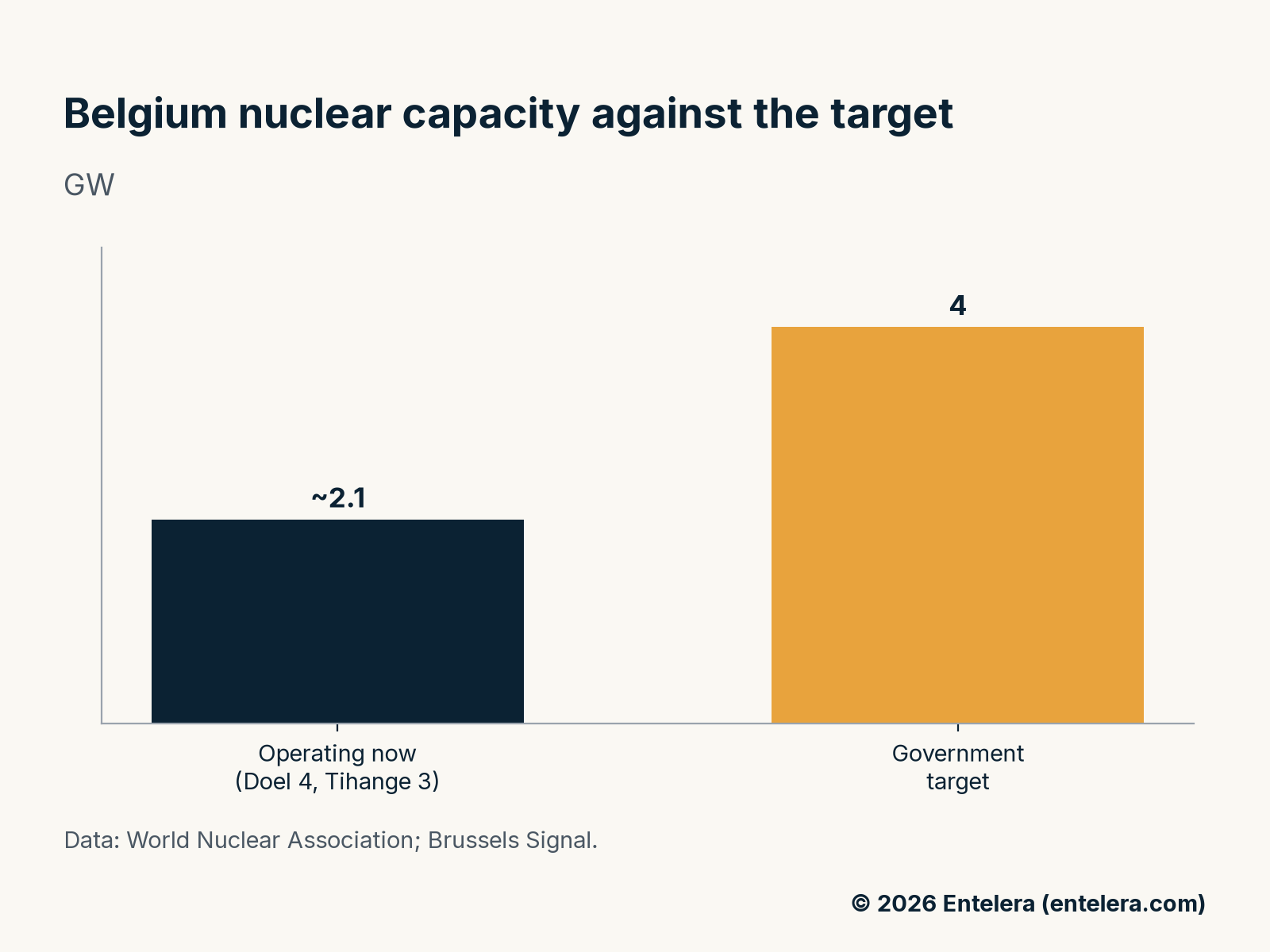
For the government, the reactors are about energy security. Only Doel 4 and Tihange 3 still run, with about 2.1 GW of capacity. Their licences now end in 2035, but the government wants them to run until 2045. Moreover, it targets 4 GW of nuclear capacity in total. In addition, Belgium repealed its nuclear phase-out law in May 2025.
Engie, on the other hand, wants out. It has shifted towards renewables and networks, which offer steadier returns. As a result, it has little appetite to fund older reactors with open-ended liabilities. A further extension of Doel 4 and Tihange 3 would cost about €2bn ($2.2bn), newmobility.news reported.
What nationalisation means for the Belgium nuclear takeover
Under the draft, the state would set Engie’s compensation itself. Engie could go to court, but the state could proceed with life extensions in the meantime. In our view, this is mainly a lever. It tells Engie that holding out for a better price may not pay.
Still, the risks run both ways. Belgium has never expropriated a company like this, and court cases could last years. Meanwhile, Europe faces a tight winter for gas and power; see our analysis of EU gas storage.
What to watch next
- The 4 November deadline, and whether it slips again.
- The due-diligence findings of Rothschild & Co and KPMG on longer reactor lives.
- Who would run the plants, with EDF among the names mentioned.
For the news, read our report on the nationalisation plan.
Sources
- VRT NWS, Belgian government considering nationalisation of nuclear power stations, 27 October 2026: vrt.be
- Brussels Signal, Belgium prepares forced nationalisation of nuclear plants as Engie talks stall, 27 October 2026: brusselssignal.eu
- newmobility.news, Belgium and Engie buy another month for nuclear takeover talks, 1 October 2026: newmobility.news
- World Nuclear Association, Belgium: World Nuclear Outlook Report (capacity as of 1 October 2026): world-nuclear.org
- Yahoo Finance, EUR/USD exchange rate history (1.117 on 27 October 2026): finance.yahoo.com