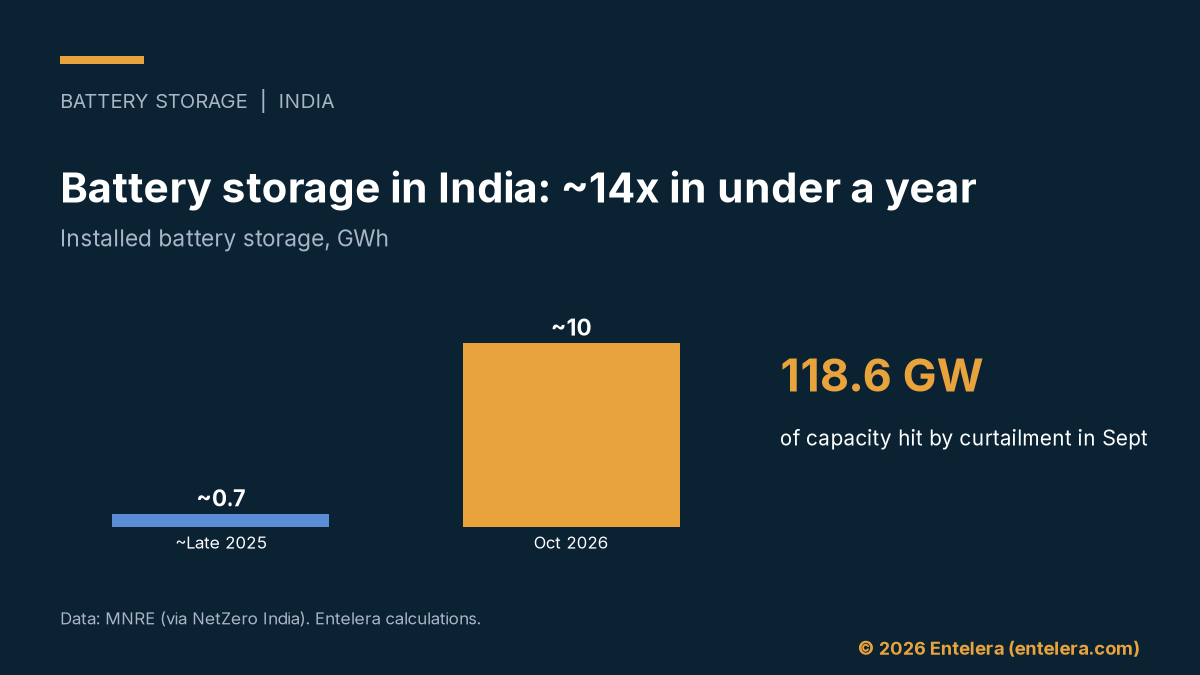
Battery storage in India has grown faster than almost anyone expected. Installed capacity rose from about 0.7 GWh to nearly 10 GWh in 10 to 11 months, MNRE Joint Secretary JVN Subramanyam said on 24 October. That is ~14x, on our estimate.
Yet in September, curtailment still affected 118.6 GW of renewable capacity. So why has the storage boom not solved the problem?
Why battery storage in India is not enough yet
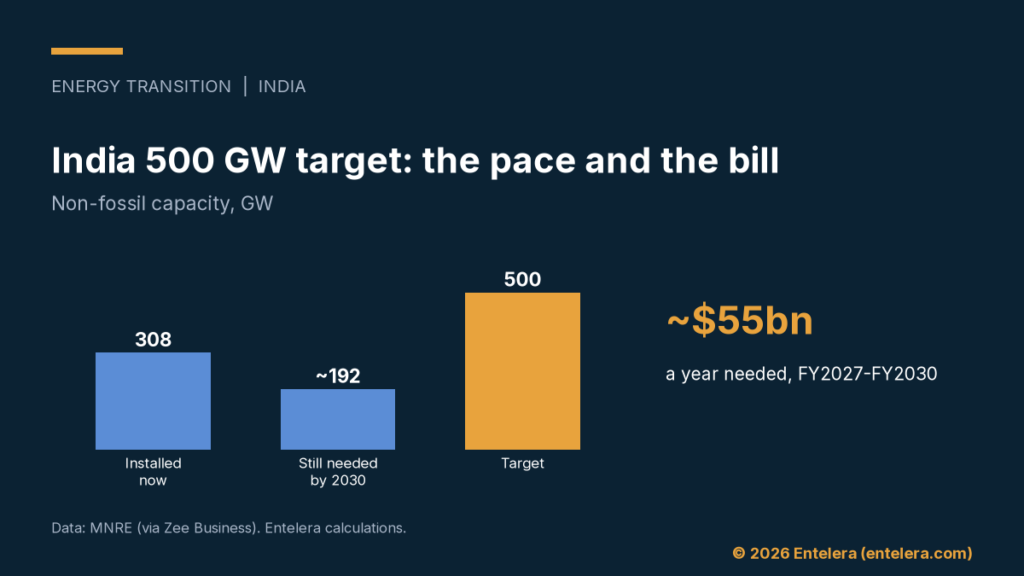
First, scale. Ten GWh is a big jump from a low base. However, it is small next to a fleet of 308 GW of non-fossil capacity. A battery mostly shifts a few hours of solar output into the evening. It cannot move power that the network has no line to carry.
Second, location. Curtailment happens where generation clusters, such as the Khavda hub in Gujarat. If the lines out of a hub are full, a battery at the other end of the country does not help.
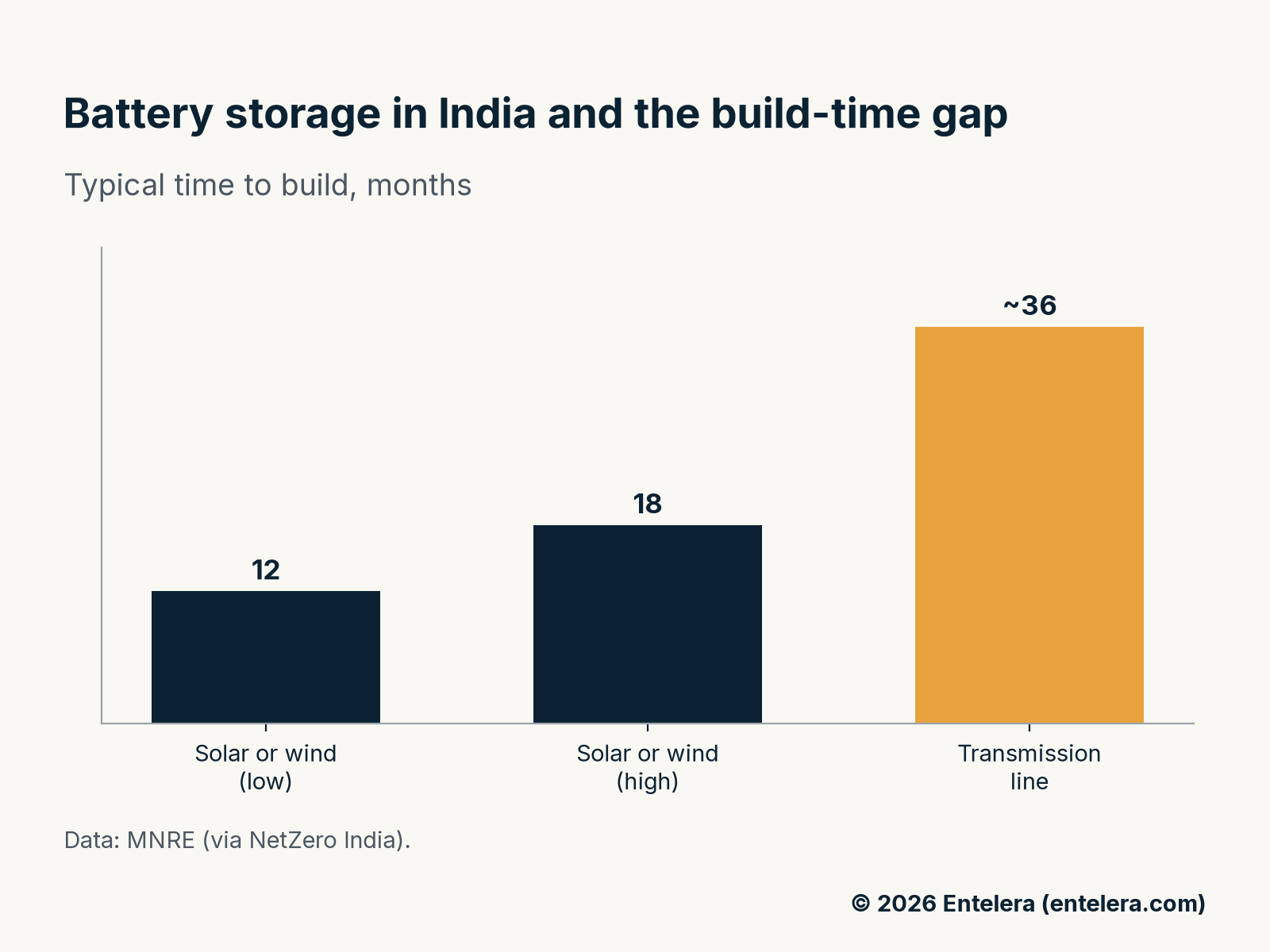
The ministry is clear about the cause. A transmission line typically takes about 36 months to build, Subramanyam said. By contrast, a solar or wind project can be ready in 12 to 18 months. On top of that, right-of-way disputes and approvals slow the lines further.
As a result, generation runs ahead of the grid. The government expects the gap to narrow over the next 18 months, as new lines come online. In the meantime, central and state agencies are adding storage, including at the distribution level.
What battery storage in India should do next
In our view, the next phase of storage should sit at the hubs that curtail most. Batteries placed there can soak up midday surplus until lines arrive. Later, they can earn from evening peaks.
Entelera Research is the editorial team behind Entelera. We cover crude, LNG, power, renewables, policy and geopolitics, looking at energy the way companies have to: supply, demand, margins, policy and risk, with every number linked to its source and a close eye on India and its place in global markets.
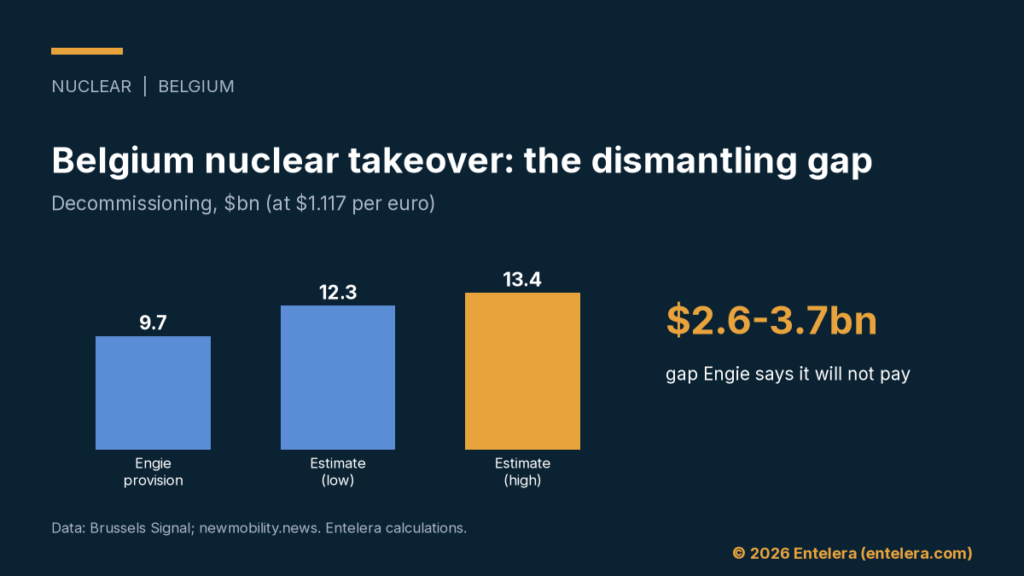
Belgium nuclear takeover talks with Engie hinge on a €2.3-3.3bn ($2.6-3.7bn) decommissioning gap. A nationalisation law is the state's lever to close it.