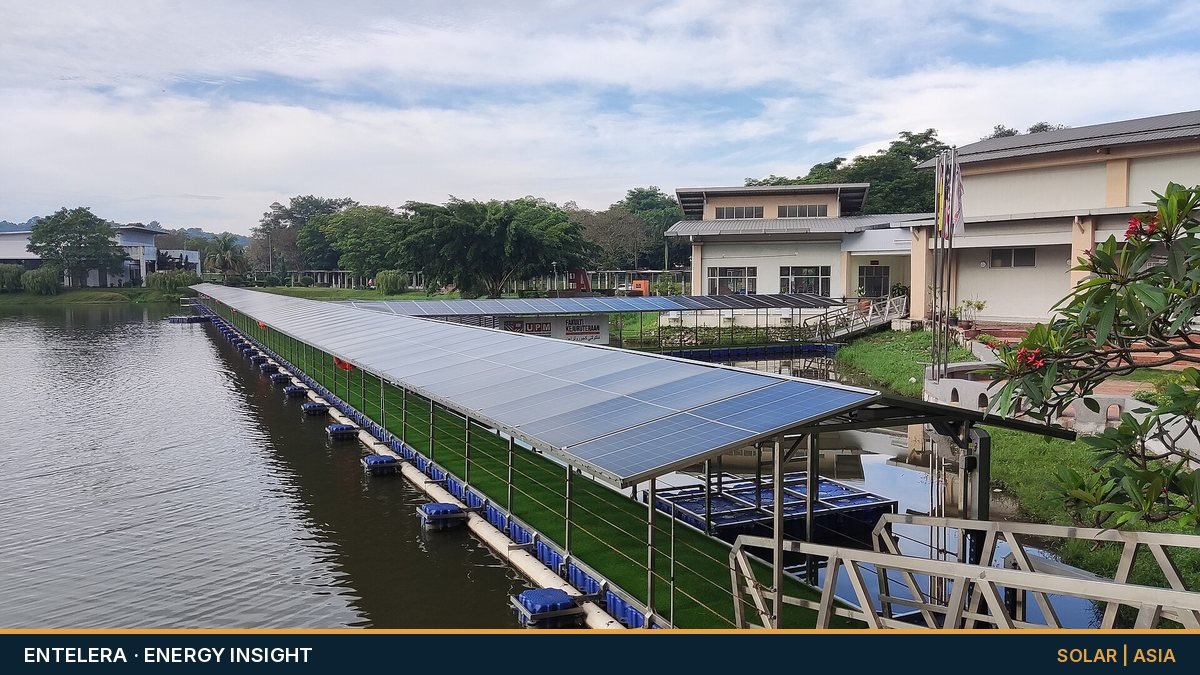
Masdar floating solar plans in Malaysia have taken two big steps. First, the Abu Dhabi Future Energy Company (Masdar) signed a power purchase agreement (PPA) with Syarikat Sesco, a unit of Sarawak Energy, on 30 October 2026. The deal covers a 400MW floating solar plant on the reservoir of the Murum hydroelectric plant in Sarawak.
Second, Masdar and its partners have started building the 200MW Chereh Dam floating solar project in Pahang. Both plants will rank among the largest floating solar installations in South-east Asia.
Masdar floating solar at the Murum dam
The Murum hydroelectric plant has a capacity of 944MW and began operating in 2014. It is Sarawak’s second-largest hydro plant after Bakun. The new solar plant will float on its reservoir and add daytime solar power to the existing hydro supply.
Sarawak Energy has other floating solar plans too. For example, a 50MW plant at Batang Ai has run since December 2024. An extra 120MW there will take it to 170MW. In addition, it plans a 300MW floating plant at the Bakun reservoir. Together, these projects support Sarawak’s goal of at least 1,500MW of solar and 10GW of total capacity by 2030.
Masdar floating solar at Chereh: financing closed
At Chereh, the project company reached financial close on 27 October 2026. It raised ~MYR580mn ($142mn) from three international lenders. Citaglobal is the engineering, procurement and construction contractor, while TIZA Global handles local development.
The plant should start operating in 2028. Once complete, it should supply enough clean power for ~100,000 homes. Meanwhile, construction will create ~1,500 jobs. National utility Tenaga Nasional will buy the power for 21 years under a PPA signed in December 2025. The consortium won the project in Malaysia’s Large Scale Solar (LSS) Cycle 5+ tender with the lowest tariff in the floating category.
Why floating solar suits hydro reservoirs
Floating panels avoid the need for large areas of land. Moreover, hydro sites already have grid links, so solar can share them. Hydro plants can also hold back water when the sun shines and release it later. As a result, the two sources balance each other.
Masdar has done this before. It built the 145MW Cirata floating solar plant in Indonesia. Furthermore, Chereh is the first part of a 10GW renewable energy roadmap that Masdar agreed with Malaysia’s investment agency, MIDA, in 2023.
Lessons for India
India also has large hydro and irrigation reservoirs that could host floating solar. The Malaysian model of pairing panels with hydro offers one route. For India’s own solar push, read our report on the PM-KUSUM 2 solar scheme outlay.
What to watch next
First, watch for the financing and build timetable at Murum. Second, look for progress on the Bakun and Batang Ai expansions. Finally, more LSS tenders in Malaysia could bring further floating projects.
Sources
- DayakDaily: Masdar, Sesco partner to develop Southeast Asia’s largest 400MW floating solar farm at Murum dam
- PV Tech: Masdar starts construction at 200MW floating solar PV project in Malaysia
- Renewable Energy Magazine: Masdar, Citaglobal and TIZA Global mark start of construction for one of Southeast Asia’s largest floating solar projects