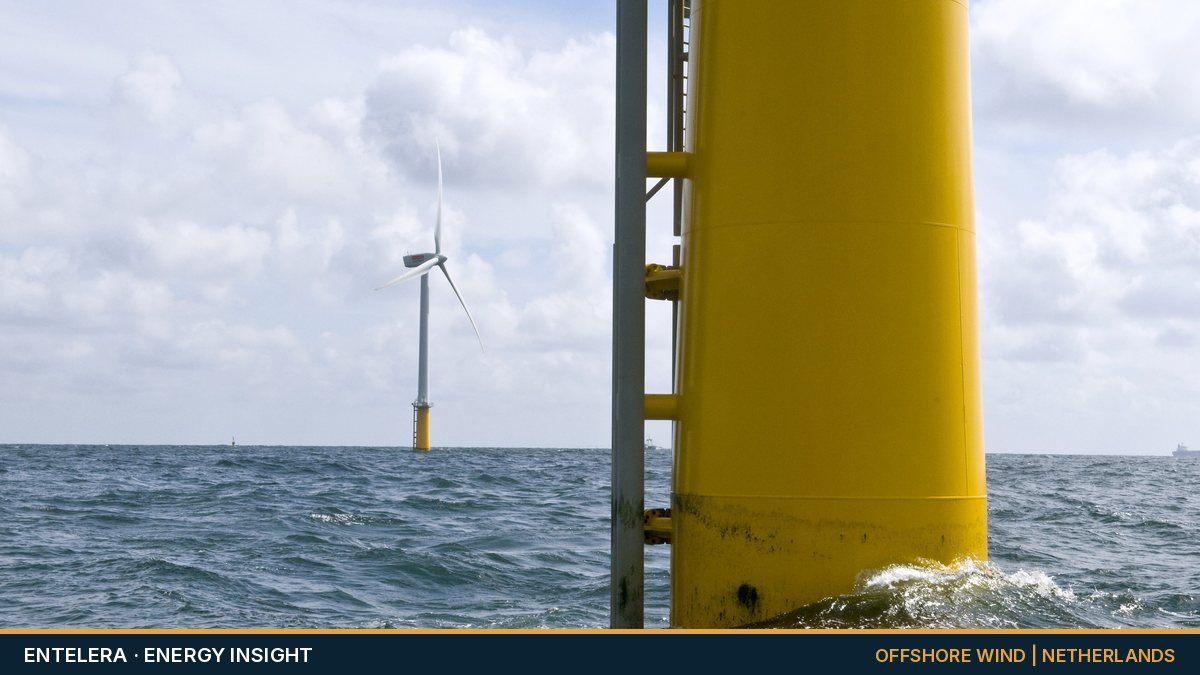
The European Commission has cleared Dutch offshore wind aid of up to €9.45bn ($10.39bn) for two new North Sea wind farms. Brussels approved the scheme under EU state aid rules on 17 November 2026. It covers IJmuiden Ver Gamma-A and IJmuiden Ver Gamma-B, which have a combined capacity of 2 GW.
How the Dutch offshore wind aid works
The Dutch name for the scheme is TOWOZ, short for a temporary support mechanism for offshore wind. The Netherlands will hold two tenders before July 2027, one for each site. Each site will have a single winner.
Importantly, subsidy is a fallback. Bidders can first offer to build without aid by paying the state a concession fee for the site. Only if nobody makes such an offer will the government consider bids that ask for support. In that case, the lowest bid for a variable premium on top of the market price wins.
The state pays the premium only when power prices are too low to cover costs. Moreover, the scheme has a bid cap and a claw-back. So winners must repay part of the aid when market prices rise above their strike price. If needed, support runs for 15 years from the start of operations. The Netherlands expects that in 2032.
Output and supply chain rules
Together, the two farms should produce up to 7,441 GWh of electricity a year. That implies a capacity factor of about 42%, which is typical for the North Sea. In addition, the Netherlands estimates they will avoid about 147mn tonnes of CO2 equivalent over their lifetime.
The tenders also bring in Net Zero Industry Act criteria. Bidders must diversify supply chains for turbines and key components. That should cut dependence on imports from outside Europe.
“Every euro invested in homegrown clean energy makes Europe more energy-independent and our industry more competitive,” said Teresa Ribera, the Commission’s executive vice-president for the clean transition.
Why the Dutch offshore wind aid matters
The approval comes as offshore wind tenders in Europe struggle with higher costs and weak bidding. Notably, the Dutch model keeps the door open to subsidy-free bids while giving developers a safety net. Also, EU rules let member states use one-way feed-in premiums like this instead of two-way contracts for difference only until July 2027. That makes this one of the last large schemes of its kind.
Wind also plays a growing role in firm clean power. Our story on Ember’s firm power study found that adding wind cuts the cost of solar-and-battery systems.
What to watch next
First, the Dutch government must publish the tender rules and timing for the two sites. Second, watch whether any developer bids without subsidy, which would leave the €9.45bn budget unused. Finally, the EU will publish the non-confidential decision under case SA.118604 after it settles any confidentiality issues.
Sources
- European Commission via Insight EU Monitoring: EU Commission greenlights €9.5 billion Dutch State aid for offshore wind farms
- Ocean News: European Commission Greenlights Dutch TOWOZ Wind Scheme For North Sea
- ExchangeRate-API: USD reference rates, 18 November 2026
- Entelera: Ember firm power study: adding wind cuts solar-and-battery costs by nearly a fifth