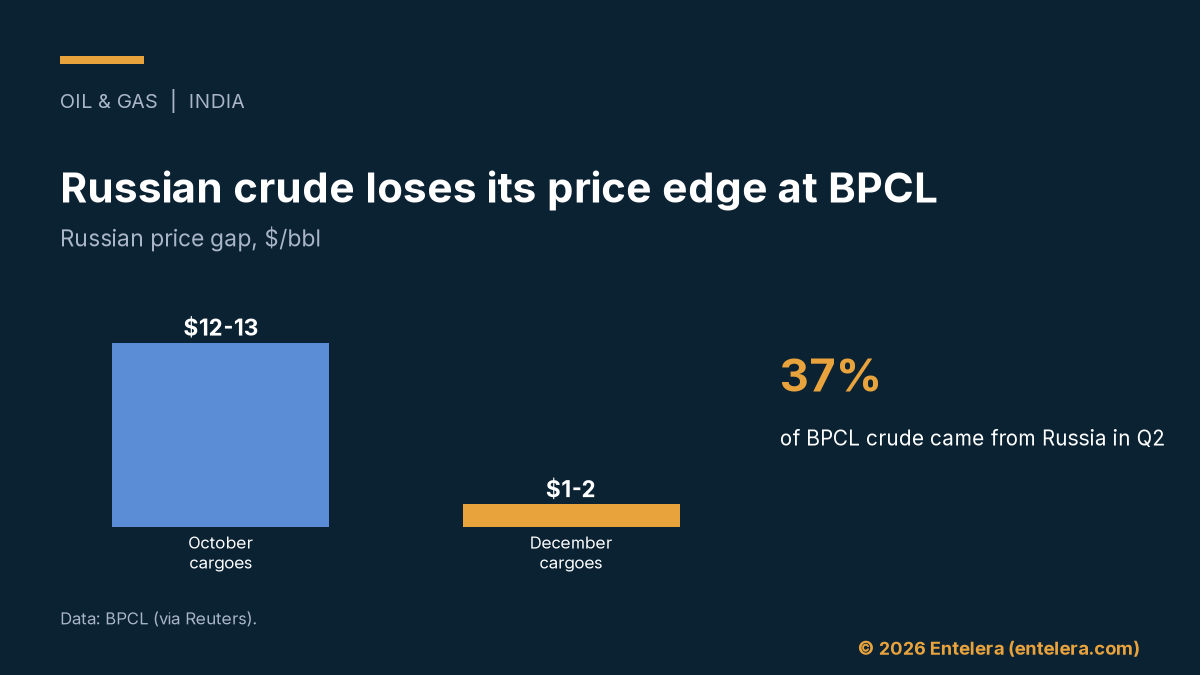
Russian crude has been the backbone of India’s refining since 2022. At BPCL, it still made up about 37% of crude in the July to September quarter. Yet on 26 October, the state refiner said it had sharply cut Russian cargoes for November.
The reason is simple: cost. This analysis looks at what changed.
Russian crude no longer pays
According to BPCL, the price gap for Russian barrels narrowed to $1 to $2 a barrel for December cargoes. By contrast, it was $12 to $13 in October. At that level, the gap no longer covers the extra cost of a long voyage.
Freight is the other half of the story. Earlier in the week, HPCL said a Suezmax tanker now costs about $9 a barrel, up from $3 to $4 in the June quarter. In addition, Gulf producers with stranded cargoes now offer delivered deals. As a result, Middle East grades now land cheaper.
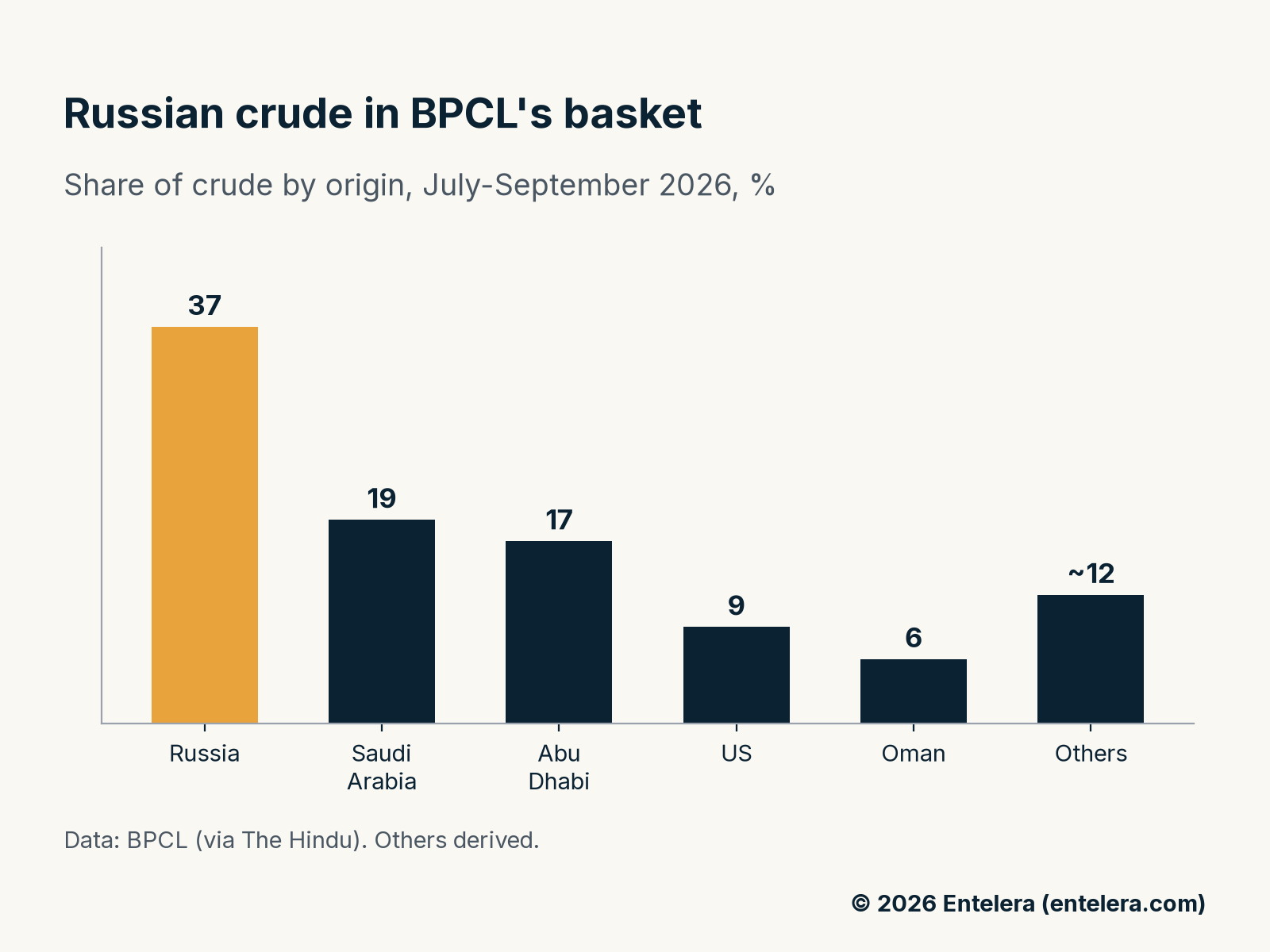
How BPCL’s basket looks
Last quarter, Russia led with 37%, followed by Saudi Arabia at 19% and Abu Dhabi at 17%. Next came the US at 9% and Oman at 6%. On our estimate, the rest made up about 12%. Moreover, spot deals were around 67% of buying, so BPCL can switch quickly.
BPCL also said supply from the Middle East had improved. Therefore, it expects higher volumes from the region in October and November. It held about 22 days of crude at the end of September, with needs tied up to December.
What it means for Russian crude in India
In our view, this is a price signal, not a policy change. If the gap widens again, flows can swing back. Still, it shows how freight and Gulf discounts now drive India’s choices. Indian Oil is also cutting Middle East term deals, so refiners are buying more on the spot market.
For India’s wider crude picture, see our analysis of the crude import bill.
What to watch next
- November import data, to confirm the shift.
- Freight rates for Suezmax and VLCC tankers.
- The Russian price gap for January cargoes.
For the news, read our report on BPCL’s Russian crude cut.
Sources
- Reuters via Euronext, India’s BPCL expects Russian crude purchases to fall in November, 26 October 2026: live.euronext.com
- The Hindu, BPCL shifts crude sourcing towards Middle East as Russian oil loses price edge, 26 October 2026: thehindu.com
- Reuters via The Hindu BusinessLine, HPCL buying Middle Eastern crude on a delivered basis, 23 October 2026: thehindubusinessline.com