Petronas and Suriname’s state oil company Staatsolie have taken a final investment decision on the Sloanea gas field, launching the Petronas Suriname LNG project. The partners announced the move in Paramaribo on 26 November 2026. The development, named KrakaWi, will cost about $1.6bn and will be the country’s first offshore gas project. A floating LNG unit of about 1.5 mtpa will process the gas, and first gas is due in mid-2030.
The KrakaWi plan in figures
The Sloanea field holds an estimated 97 bcm of recoverable gas, according to Staatsolie. Petronas will drill four production wells and lay subsea infrastructure. Then a floating liquefied natural gas facility will chill the gas for export by ship. The partners expect the project to run for about 25 years.
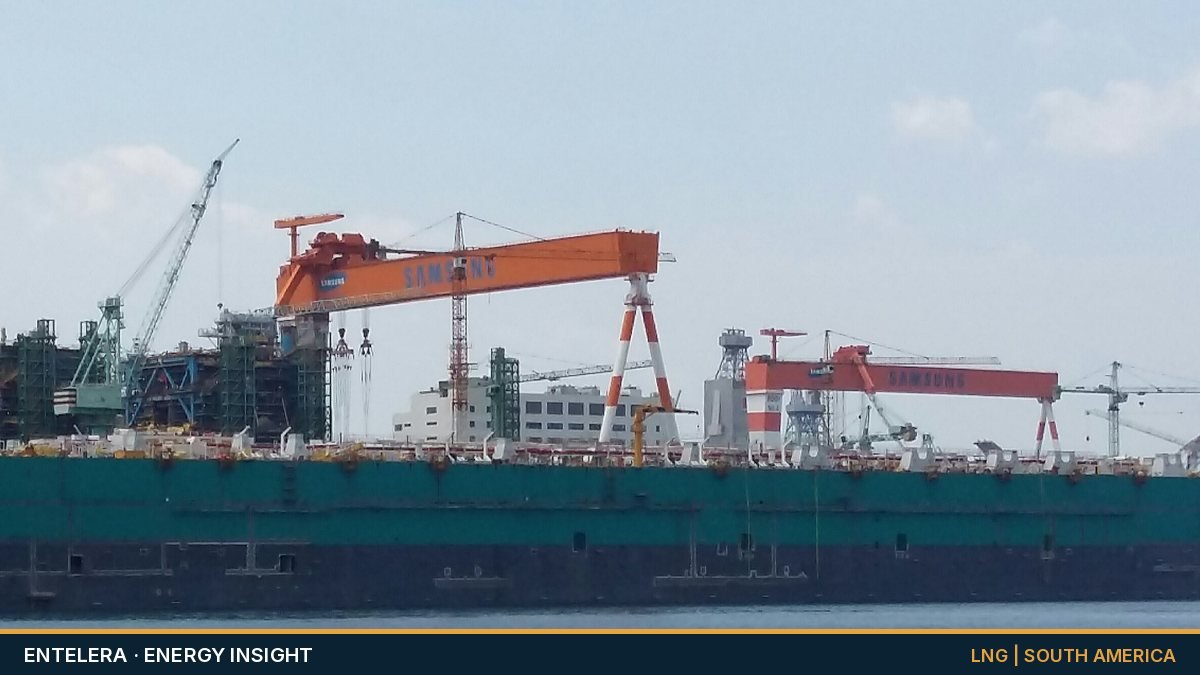
Petronas operates Block 52 with an 80% interest, and Staatsolie holds the remaining 20%. Staatsolie will fund its share of the development in proportion to that stake. In addition, the floating unit will sit about 120 km off the coast in roughly 450 m of water, according to Wison New Energies. The Chinese yard signed the detailed feasibility study for a new-build floating LNG unit in April 2025. However, the partners have not yet named a builder for the vessel.
A decade from licence to decision
The road to the FID has been long. The two companies signed the production sharing contract for Block 52 in 2013. Petronas then found gas with the Sloanea-1 well in late 2020. Next, it drilled the Sloanea-2 appraisal well and ran extensive tests in 2024. Staatsolie declared the field commercial on 11 November 2025 and approved the field development plan on 24 November 2026, only two days before the decision.
“Gas will remain essential to how the world secures its energy while building toward a lower-carbon future,” said Tan Sri Tengku Muhammad Taufik, president and group chief executive of Petronas. He added that “bringing new basins into the global gas system strengthens that resilience”.
For Staatsolie, the project goes beyond export revenue. “Natural gas is a cleaner energy source, and production can be sustained at a relatively stable level for 25 years, unlike oil production,” said managing director Annand Jagesar. He also noted that some oil reservoirs cannot produce without gas processing. Moreover, the scheme prepares the ground for future gas-to-shore projects and cleaner power on land. “This project is not just about PETRONAS and Staatsolie. It affects our entire country,” said President Jennifer Geerlings-Simons.
How Petronas Suriname LNG fits a wider push
Suriname is moving fast as an offshore frontier next door to Guyana. TotalEnergies and APA are already building the $10.5bn GranMorgu oil project in Block 58. It should start up in 2028 with capacity of 220,000 b/d, OilPrice.com reported. Together, the two schemes add up to more than $12bn of planned offshore investment.
Petronas is also widening its acreage. It signed a production sharing contract for deepwater Block 66 in June 2025 and committed to two exploration wells. Later, in November 2025, it became operator of shallow-water Block 9. It also took a stake in Block 10 alongside Staatsolie’s subsidiary Paradise Oil Company, Chevron and QatarEnergy. Next door in Guyana, meanwhile, ExxonMobil took a $12.5bn FID on the Longtail gas project earlier this month.
What the Petronas Suriname LNG decision means
In our view, the decision matters more for Petronas’s portfolio than for the global balance. By our estimate, 1.5 mtpa equals roughly 2 bcm of gas a year. That is small next to Qatar or the US. Over 25 years, it would also use only about half of the 97 bcm resource, which leaves room for a second phase or for gas-to-shore power.
Still, a small Atlantic source has real value for an Asian seller. For example, a cargo from Suriname can reach Europe, Latin America and, via the Panama Canal, Asia. So the Petronas Suriname LNG volumes give its traders new optionality across basins and less exposure to a single region. That flexibility has become more valuable since the Iran war made Gulf supply less reliable. The IEA has already warned that LNG supply tightness could last into 2027.
Moreover, the FID lowers risk for the basin. Gas processing can unlock oil reservoirs with high gas content. As a result, future oil finds in Suriname could become easier to develop.
What happens next
Next, Petronas must award the main contracts, starting with the floating LNG vessel. That choice will largely decide whether the mid-2030 start date holds, since a new-build floater is the longest-lead item. Investors should also watch for offtake deals for the Petronas Suriname LNG volumes and for drilling results from Block 66.
For a deeper analysis, read: Suriname LNG: Why Petronas’s KrakaWi FID Buys Atlantic Optionality, Not Volume
Sources
- Petronas: PETRONAS and Staatsolie Reach FID for Suriname’s First Offshore Gas Development
- Government of Suriname (Kabinet van de President): PETRONAS en Staatsolie nemen FID voor Sloanea-gasveld; eerste gasproductie in 2030
- Demerara Waves (Staatsolie statement): Petronas, Staatsolie make US$1.6 billion FID on natural gas development
- OilPrice.com: Petronas and Staatsolie Greenlight First Offshore Gas Development in Suriname
- Wison New Energies: Wison New Energies Signed FLNG DFS Contract for Suriname Offshore Block 52