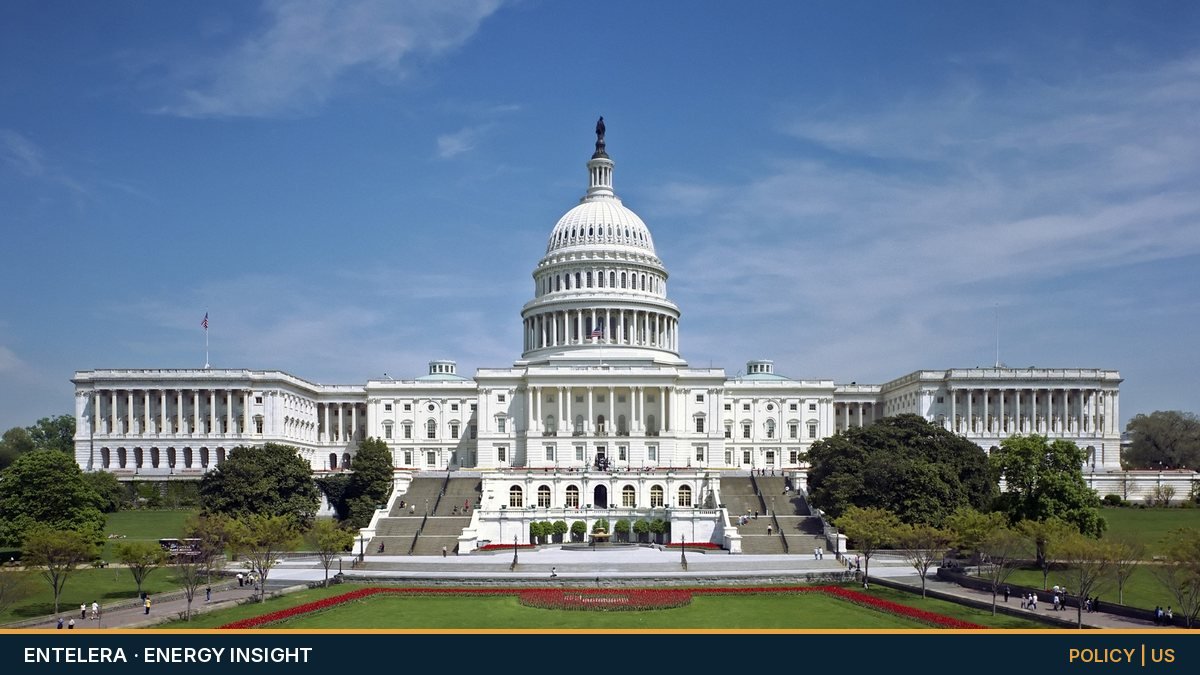
The US Senate permitting reform push cleared its biggest hurdle on 19 November 2026. Senators passed the Bipartisan American Affordability and Jobs Act (BAAJA) by 62 votes to 33, Reuters reported. The bill aims to speed approvals for power plants, transmission lines, pipelines and data centres. Now it moves to the Republican-controlled House of Representatives. President Donald Trump has said he will sign it if it passes.
Reuters called it Congress’s most significant effort in years to ease the bottlenecks blamed for rising energy costs. Moreover, the US Senate permitting reform bill took four years to put together. Its authors want it to become law before a new Congress begins in January 2027.
Who voted for US Senate permitting reform
Republican Shelley Moore Capito and Democrat Sheldon Whitehouse wrote the bill with Republican Mike Lee and Democrat Martin Heinrich. In the end, 14 Democrats and one independent, Angus King, joined most Republicans, according to the Senate’s own vote record. Senate Democratic leader Chuck Schumer voted in favour.
“Tonight, the passage of permitting reform in the Senate finally became reality,” Capito said. Meanwhile, Whitehouse said Democrats wanted lower energy costs and an end to a free ride for data centres.
However, most of the no votes came from Democrats. They argued that the bill weakens environmental protections and tribal rights. Jeff Merkley of Oregon said lawmakers had not properly consulted tribes. Two Republicans, Josh Hawley and Mike Rounds, also voted against.
What US Senate permitting reform changes for energy projects
The bill tightens deadlines on federal environmental reviews. In addition, it limits when agencies can revoke permits and when opponents can challenge them in court. A Congressional Research Service (CRS) summary covers the bill as introduced. Under it, opponents would have 150 days to file claims under the National Environmental Policy Act (NEPA). Also, courts could generally no longer cancel permits or halt projects.
For power, the bill widens the Federal Energy Regulatory Commission’s (FERC) authority to permit interstate transmission lines. It also requires more regional and interregional grid planning. Crucially for the AI boom, new data centres of 20 MW or more would pay the full extra cost of the grid that serves them. NBC News reported this, citing a Washington policy group.
For oil and gas, the CRS summary shows two key changes. First, upkeep work on existing interstate gas pipelines gets a fast-track exemption from full review. Second, states get narrower grounds to block pipelines and power lines through Clean Water Act water-quality certificates. Separately, geothermal lease sales would move from every two years to every year.
Why US Senate permitting reform matters for gas and power markets
For traders, the bill targets a key cause of regional price gaps in US gas and power. Simply put, pipes and wires take years to build. Faster pipeline permits would help move Appalachian and Permian gas to demand centres and LNG export terminals. Likewise, faster transmission would ease grid congestion as data-centre demand climbs.
Even so, the effect will take time. New projects still need years to plan and build, and existing court fights will go on. We covered a similar push in Europe in our story on the EU grids package permitting deal.
What happens next in the House
Next, the House must act. The House already passed its own, narrower NEPA bill, the SPEED Act, on 18 December 2025. House Majority Leader Steve Scalise said, “we want to see a bill pass both chambers”. However, he added that “the details matter”.
Senate Majority Leader John Thune, by contrast, urged the House to pass the Senate text as it stands. If the bill goes back and forth, “I can’t predict what happens,” he told reporters. Therefore, the key test for US Senate permitting reform is whether the House takes up the Senate bill before the current Congress ends.
Sources
- Reuters via Investing.com: US Senate passes bipartisan bill to speed energy, infrastructure projects
- U.S. Senate Daily Press: Thursday, November 19, 2026
- US Senate Committee on Environment and Public Works: Senate Passes Capito’s Bipartisan American Affordability and Jobs Act
- NBC News: Senate passes sweeping bill simplifying permitting rules to build in America
- Congressional Research Service: Bipartisan American Affordability and Jobs Act (BAAJA) of 2026: Summary of All Sections (R49506)
- House Committee on Natural Resources: House Passes Historic Bipartisan Permitting Reform Legislation