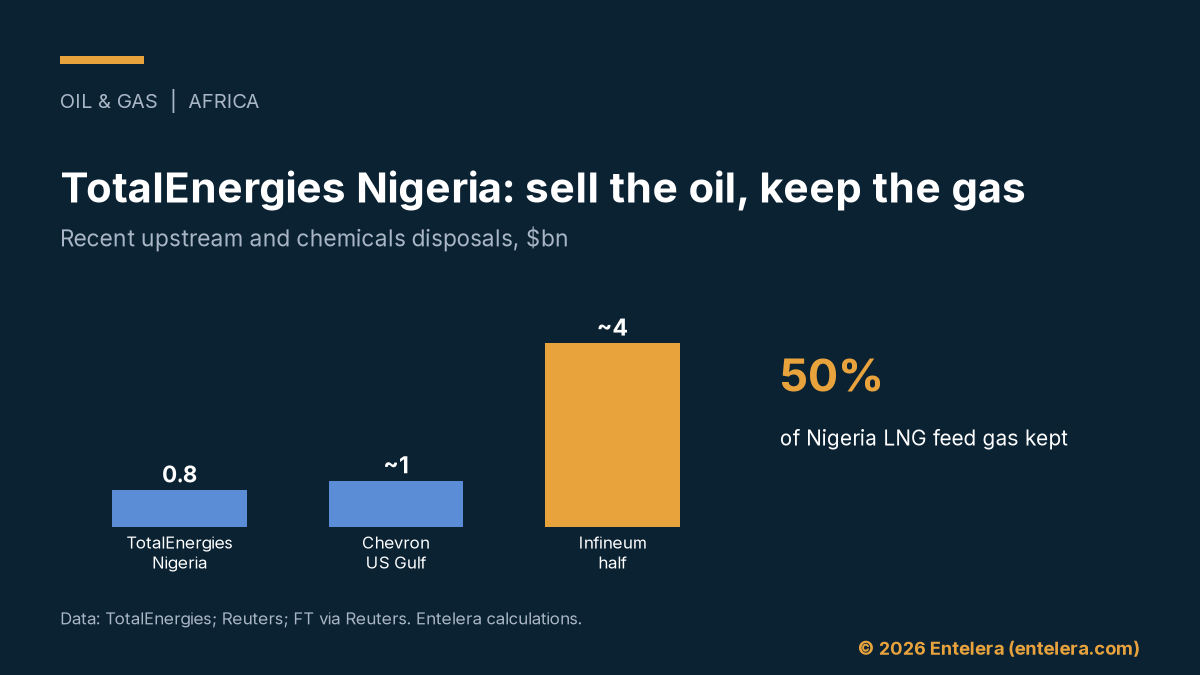
TotalEnergies Nigeria has sold its 10% non-operated stake in the Renaissance JV oil licences to Vaaris for $800mn. The company completed the deal on 27 October. Crucially, it kept its full economic interest in three gas licences that supply 50% of Nigeria LNG’s feed gas.
In fact, the split is the story. This analysis explains why the French major sold one and kept the other.
What TotalEnergies Nigeria sold
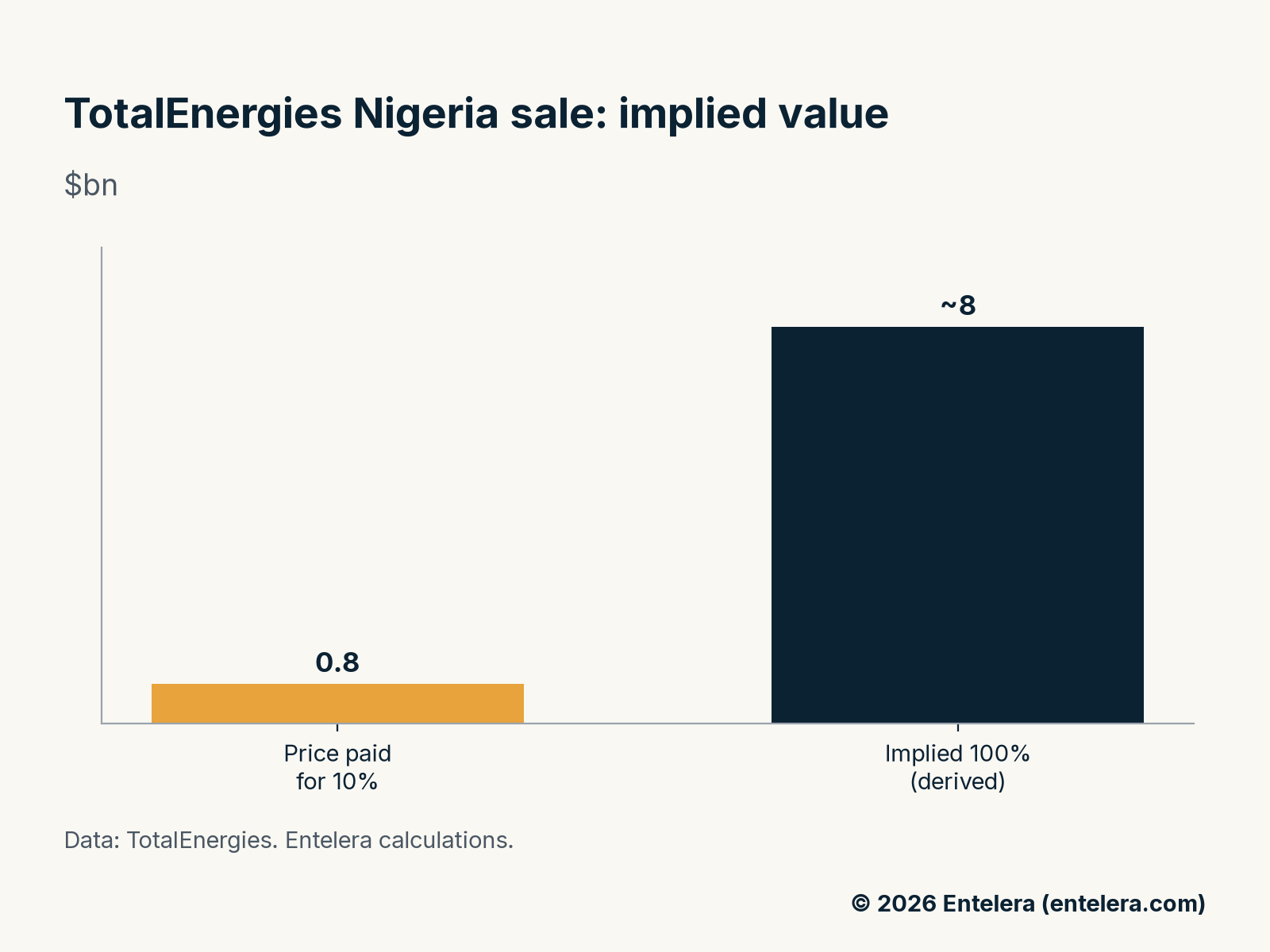
First, TotalEnergies did not run these licences. As a minority partner, it had little say over spending or operations, in our view. On a simple pro-rata basis, $800mn for 10% values the oil licences at ~$8bn, on our estimate.
However, the deal is not new. In fact, TotalEnergies announced it on 14 January, well before oil prices jumped. Still, completing it now, with Brent above $110, locks in value.
In contrast, the gas licences OML 23, OML 28 and OML 77 feed Nigeria LNG, an export plant. As a result, the gas ties into a business TotalEnergies wants to grow. Moreover, LNG demand is strong. The IEA warns of a tough winter for European gas. In particular, Qatar and the UAE cannot export as before.
Even so, Nigeria also remains important to the group. For example, it produced 188,000 boe/d there in 2025. It also runs about 540 service stations.
A pattern across the majors
In other words, TotalEnergies is not alone. For instance, Chevron is marketing older US Gulf fields that could raise ~$1bn. Similarly, Shell and ExxonMobil are weighing a sale of their additives venture Infineum at ~$8bn. In our view, the majors now use high prices to sell what they do not run or do not need.
Entelera Research is the editorial team behind Entelera. We cover crude, LNG, power, renewables, policy and geopolitics, looking at energy the way companies have to: supply, demand, margins, policy and risk, with every number linked to its source and a close eye on India and its place in global markets.
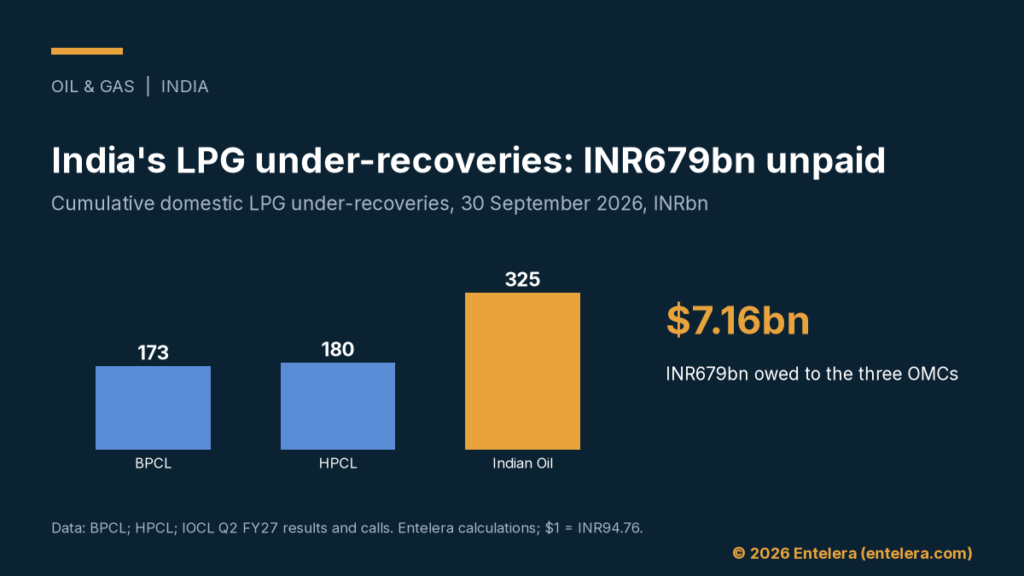
LPG under-recoveries at Indian Oil stood at INR325bn ($3.43bn) on 30 September 2026 as profit nearly tripled. We explain the support gap and inventory risk.