The East-West pipeline has become the most important oil line in the world this autumn. On 24 October, Yemen’s Houthis said they had targeted it, its pumping stations, an Aramco site in Yanbu and the Rabigh refinery. Saudi Arabia did not confirm the claims.
Even so, the claims show where the risk now sits. This analysis explains why.
What the East-West pipeline does
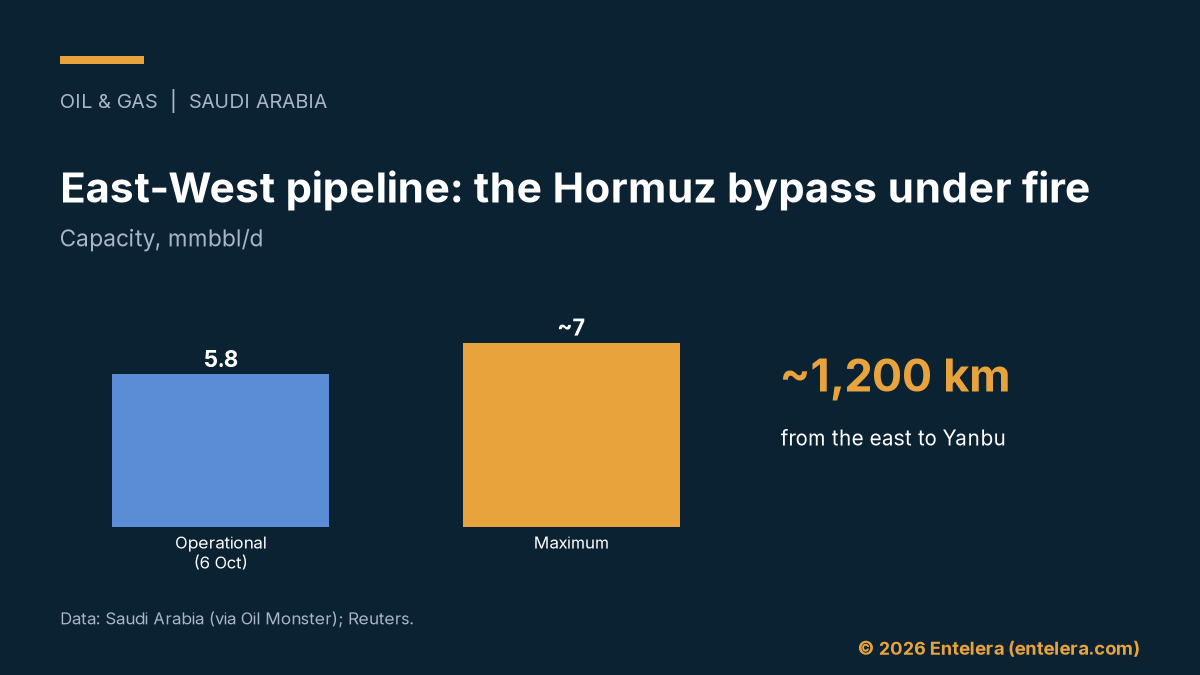
To begin with, the line runs about 1,200 km from the oilfields in the east to Yanbu on the Red Sea. In addition, its maximum capacity is about 7 mmbbl/d. Since the war largely shut the Strait of Hormuz, however, it has carried most Saudi crude exports. In effect, it is the kingdom’s way around the strait.
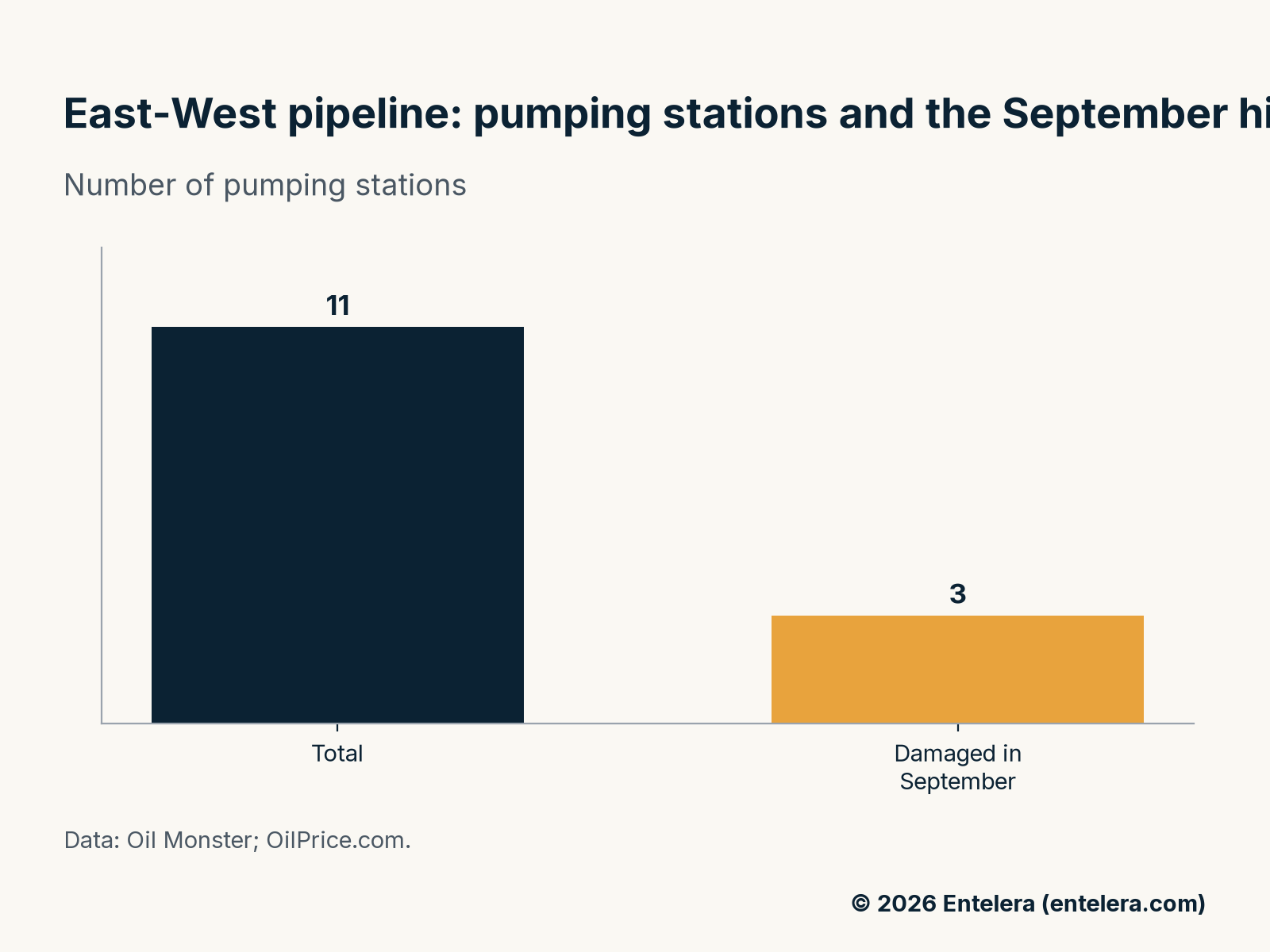
However, it is not running at full capacity yet. For example, after a drone attack on 10 September, the line shut for about two weeks. That attack damaged three of its 11 pumping stations. By 6 October, operational capacity had recovered to 5.8 mmbbl/d, Saudi Arabia said.
Why pumping stations matter more than the pipe
In general, damage to a pipe is quick to repair. By contrast, a pumping station keeps the oil moving, and losing a few of them can slow the whole line. That is why the Houthis keep naming the stations, in our view. In September, damage to three stations was enough to halt loadings at Yanbu.
For that reason, the market watches two things after each claim. First, does Saudi Arabia confirm damage? Second, do Yanbu loadings fall? So far in October, neither has happened.
What a hit to the East-West pipeline would mean
In our view, the line is now the single biggest point of failure in Gulf supply. After all, with Hormuz flows disrupted, there is little spare route capacity if Yanbu exports stop. For example, Brent settled at $116.72 on 23 October, its highest close since April. Claims like these help keep the risk premium high.
For India, which imports most of its crude, any outage would hit both price and supply. For the price side, see our analysis of Brent at $110.
What to watch next
- Saudi confirmation, or not, of damage after each claim.
- Yanbu loadings in ship-tracking data.
- Operational capacity, and whether it climbs back towards 7 mmbbl/d.
For the news, read our report on the latest Houthi claims.
Sources
- Reuters via Investing.com, Houthis say they attacked Saudi oil pumping stations, Riyadh airport as fighting intensifies, 26 October 2026: investing.com
- Oil Monster, Houthis claim fresh attack on Saudi East-West pipeline, 27 October 2026: oilmonster.com
- OilPrice.com, Houthis claim attacks on Saudi Arabia’s East-West oil pipeline, 26 October 2026: oilprice.com