Chevron is moving closer to a deal to explore Syria’s offshore waters. On 19 November 2026, Syrian Petroleum Company (SPC) chief executive Maher Khalil al-Hassan met a Chevron delegation in Damascus. The two sides discussed how to turn their February 2026 memorandum into an implementation agreement for Block 1, state news agency SANA reported. The Chevron Syria offshore talks then won public backing from Washington.
A day later, US special envoy Tom Barrack welcomed the talks on X. “Syria is now open to real deals, at scale and tailored to the moment, with America’s premier companies,” he wrote, Anadolu Agency reported. He also said he was proud to see the two companies “working together to unlock Syria’s energy potential”.
What the Chevron Syria offshore talks cover
The talks build on a memorandum of understanding that SPC signed on 4 February 2026. Chevron and the Qatari group UCC Holding, part of Power International Holding, joined it. At the time, Chevron called it a preliminary step to evaluate offshore exploration, Reuters reported.
According to SANA, al-Hassan pledged full support and faster procedures to reach a final agreement. Likewise, the Chevron team voiced satisfaction with progress. It also confirmed the company’s interest in completing the remaining steps.
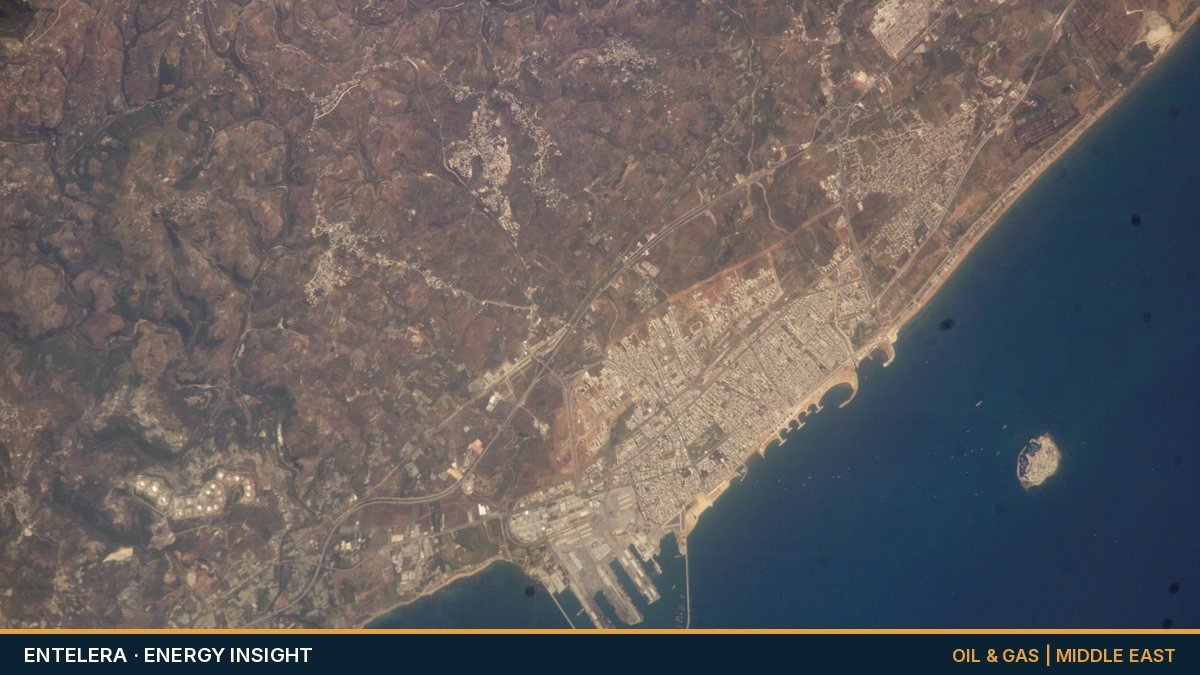
Block 1 lies in the southern part of Syria’s waters, off Tartus. One estimate puts its gas at about 250 bcm, Welat TV reported. However, no well has tested that figure yet. Earlier, SPC officials said the stages up to a possible gas discovery could take three to four years once the sides sign a contract.
Why Chevron Syria offshore matters for East Med gas
The location explains the interest. Syria’s coast sits between the large gas finds off Israel and Egypt. Moreover, Chevron already operates Leviathan, Israel’s largest gas field. A Syrian block would therefore extend its East Med footprint.
Syria itself needs the energy. Its oil reserves stand at about 2.5bn barrels, and output runs at about 100,000 b/d, Al Jazeera reported. Similarly, gas reserves total about 285 bcm. Moreover, SANA describes the sector as war-damaged and in need of foreign investment.
For gas traders, any Syrian supply stays a long-dated story. Still, new East Med gas could ease the region’s reliance on imported LNG and pipeline gas later in the decade. In addition, SPC talks in June 2026 covered a possible Chevron role in the Kirkuk-Baniyas pipeline for Iraqi crude. That route would give Iraq another outlet to the Mediterranean, alongside the restarted Kirkuk-Ceyhan line.
The politics behind the deal
President Ahmed al-Sharaa chaired a first meeting between SPC and Chevron on 2 December 2025, AA reported. Barrack’s post signals that Washington now backs that push. Even so, an MOU does not commit Chevron to spend money or drill.
What to watch
Next, watch for a signed implementation agreement for Block 1 and its terms. After that, watch for seismic work, a drilling timetable and any role for UCC Holding. Finally, watch whether other US majors follow Chevron into Syria.
Sources
- Anadolu Agency: US special envoy says Syria now open to ‘real deals,’ welcomes Chevron energy talks
- Anadolu Agency (Arabic): Syria and Chevron discuss an implementation agreement for oil and gas exploration
- Al Jazeera (Arabic): Syrian Petroleum and Chevron: talks on an implementation agreement to start offshore exploration
- Reuters: Chevron signs initial exploration deal for Syrian waters with Qatari firm
- Welat TV: Syrian Petroleum Company and Chevron Discuss Expediting Offshore Exploration Deal
- Rebuilding Syria: Syria and Chevron Offshore Exploration: Timeline From Memorandum to Contract Talks