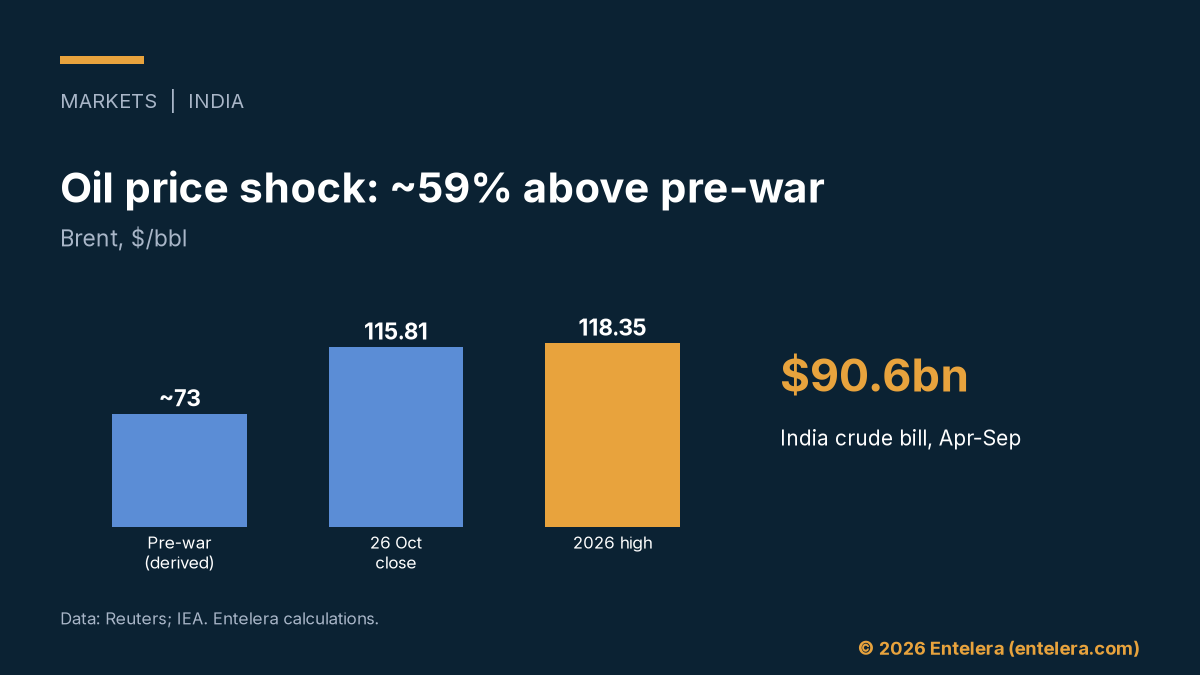
The oil price shock of 2026 is unlikely to fade soon. On 26 October, IEA chief Fatih Birol said he sees no credible path for energy markets to return to pre-war conditions in 2027. Brent was then trading about 59% above its pre-war level.
For India, which imports most of its crude, that matters more than for almost anyone. This analysis sets out the numbers.
How big is the oil price shock?
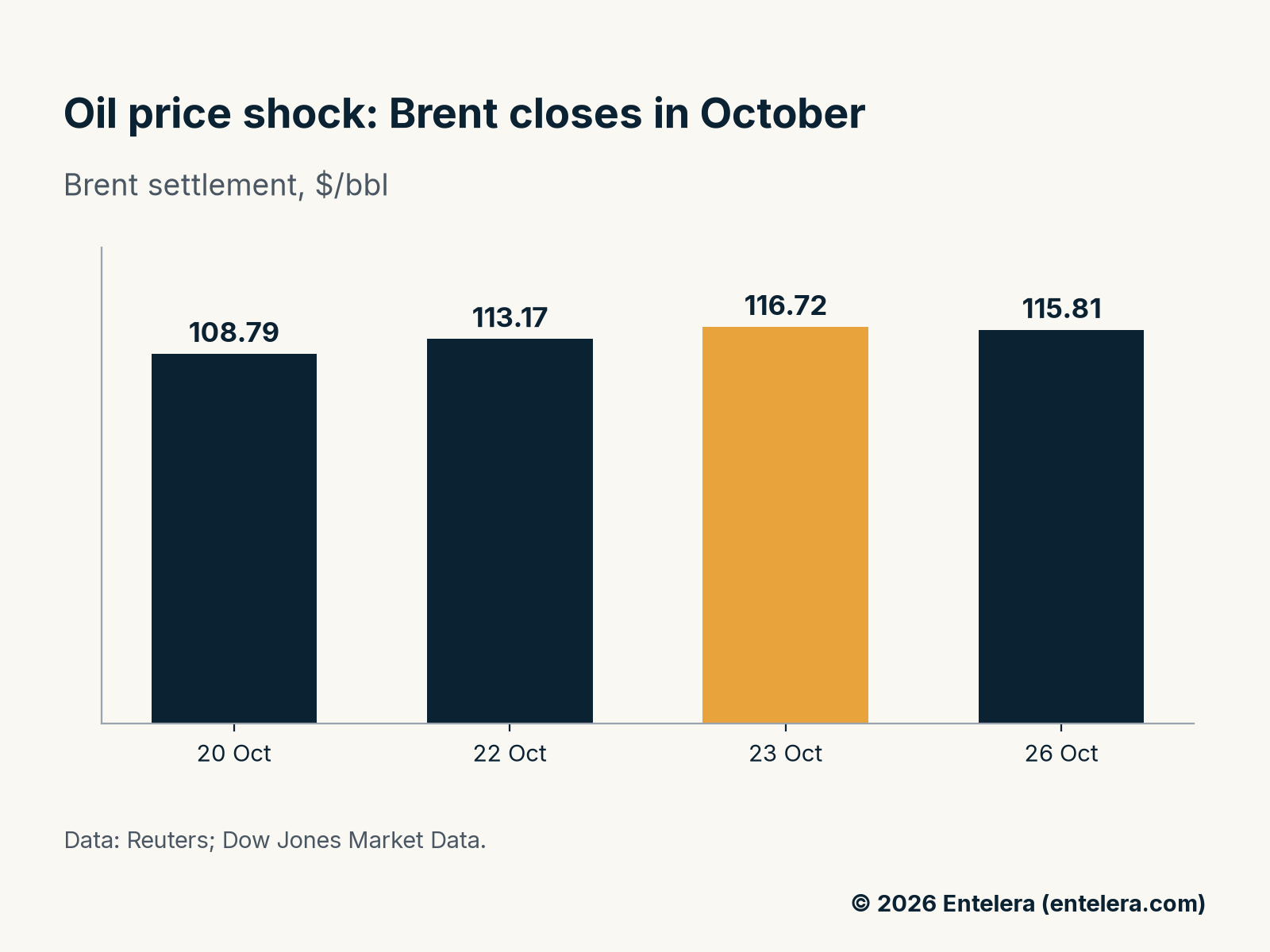
Brent settled at $115.81 a barrel on 26 October. Working back from the IEA’s 59% figure, the pre-war price was ~$73, on our estimate. In other words, oil costs ~$43 a barrel more than before the war. Brent’s 2026 high is $118.35, set on 31 March.
The past week shows how quickly prices move. Brent closed at $108.79 on 20 October, then $113.17 on 22 October and $116.72 on 23 October, as attacks on Saudi sites went on.
What the oil price shock costs India
India’s crude import bill rose 46% to $90.6bn in April to September, our earlier report showed. Volumes rose less than 1%, so almost all of the rise came from price. Therefore, each further rise feeds straight into the bill.
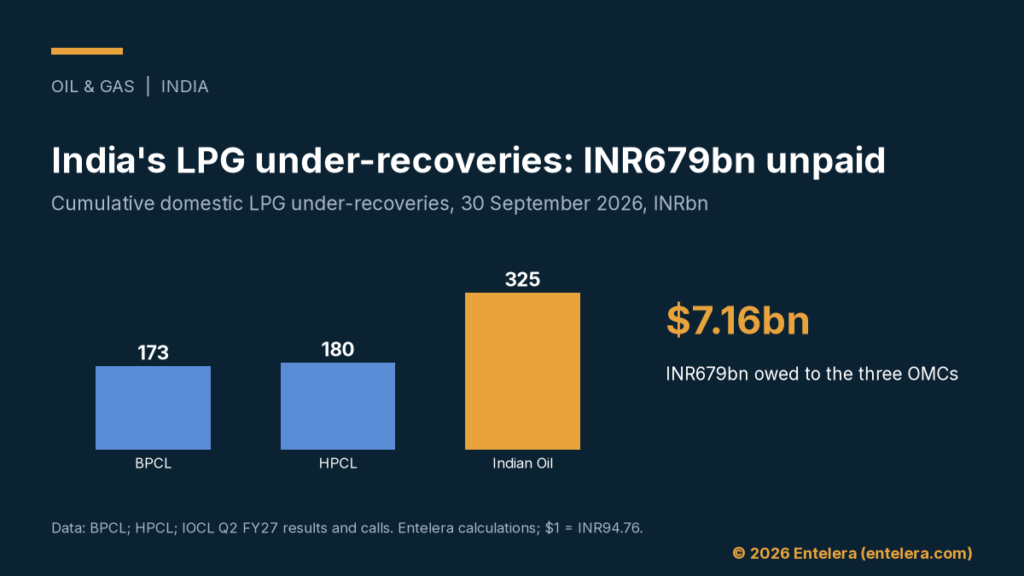
Birol made the same point. He said that near $120, oil has a major impact on the trade deficits of many countries. In addition, he warned about diesel this winter, as demand rises and several refineries enter maintenance. Meanwhile, state retailers in India still sell fuel below cost.
Why prices may stay high
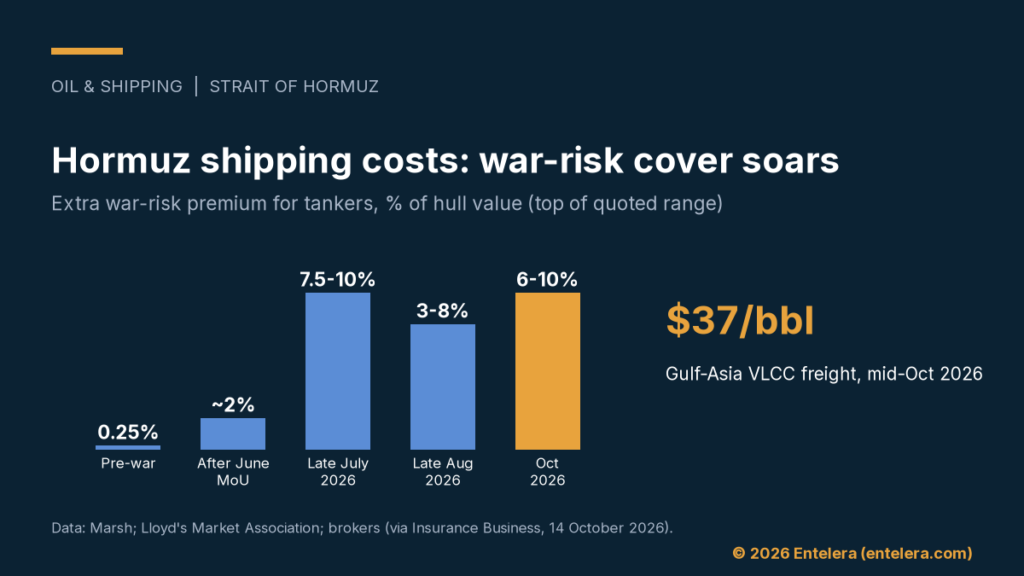
Before the war, the market was heading for a surplus this year. Instead, the conflict disrupted flows through Hormuz and the Red Sea. On top of that, Europe faces a tough gas winter, because Qatar and the UAE cannot export as before. In our view, the risk premium will not fall far until shipping normalises.
For the shipping side, see our analysis of Hormuz flows.
What to watch next
- Talks in Tehran, which pulled prices lower on 26 October.
- Diesel cracks as winter demand starts.
- India’s October import bill, due next month.
For the news, read our report on Birol’s warning.
Sources
- Reuters via The Star, IEA’s Birol does not expect energy markets to return to pre-war levels in 2027, 26 October 2026: thestar.com.my
- Reuters via Yahoo Finance, Oil settles lower on peace hopes, Saudi attacks limit losses, 26 October 2026: finance.yahoo.com
- Entelera, India’s crude import bill jumps 46% to $90.6bn in April-September, 19 October 2026: entelera.com
- Entelera, Brent crude settles at $116.72, its highest since April, 24 October 2026: entelera.com