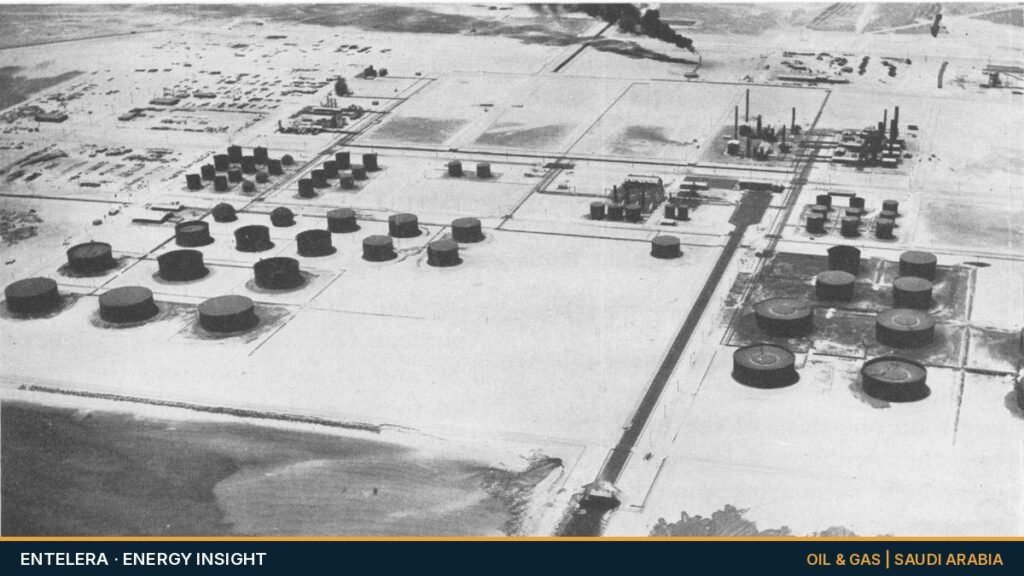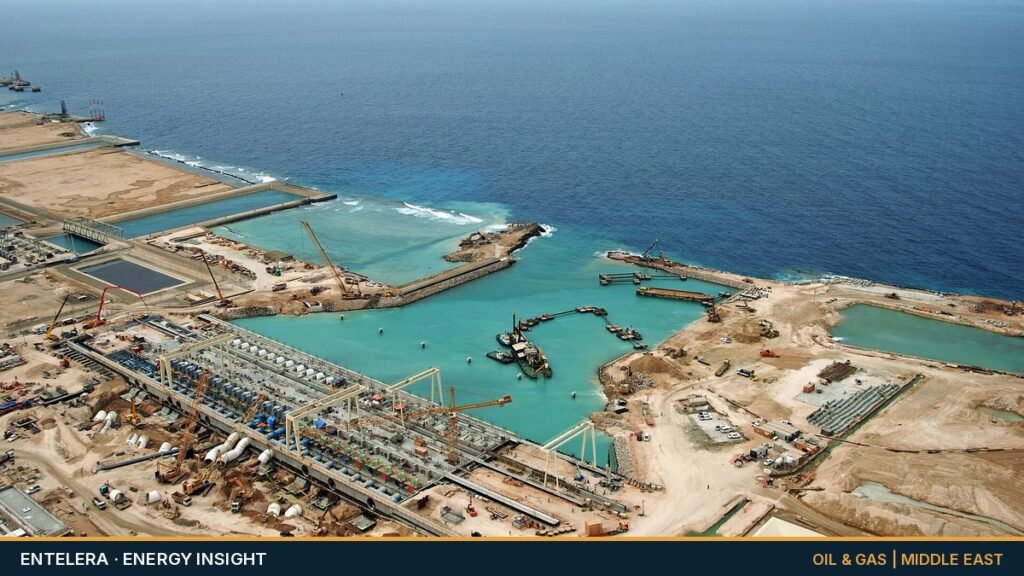
A hostile aerial projectile hit Saudi Aramco’s Jazan refinery on 26 November 2026, and the Jazan refinery attack killed a Nepalese worker and halted some operations. It came only a day after Yemen’s Houthis claimed a strike on Ras Tanura, the kingdom’s largest refinery. As a result, oil markets added risk premium again. Brent settled up 1.2% at $96.57 a barrel, its highest close since 6 November 2026.
What the Saudi Energy Ministry said about the Jazan refinery attack
Saudi Arabia’s Ministry of Energy said the projectile struck the refinery in the Jazan region on Thursday afternoon. It started a fire, which crews have since brought under control. However, the blaze forced “the temporary suspension of some of the refinery’s operational activities”, an official source told the state news agency.
According to preliminary information, one Nepalese worker died. Several other workers of various nationalities suffered injuries and are receiving medical care. Meanwhile, emergency and technical teams are assessing the damage and checking the safety of the facilities. The ministry has not said which units stopped or when they will restart.
Notably, the statement did not name the attacker. Earlier on Thursday, however, the Saudi-led coalition fighting the Houthis said the group had targeted the refinery. Later, the coalition said its forces had destroyed a ballistic missile launch platform in Yemen’s port city of Hodeidah that the Houthis had used. “Targeting civilians and civilian infrastructure would be met with a firm military response,” coalition spokesman Turki al-Maliki said on X.
Why Jazan matters to Aramco
The plant sits in south-west Saudi Arabia, on the Red Sea coast near the Yemeni border. It can process up to 400,000 barrels of crude a day. Moreover, it lies near the Bab el-Mandeb Strait, which Reuters calls a vital route for Gulf oil producers seeking access to the Red Sea. That route has gained weight while traffic through the Strait of Hormuz stays disrupted.
The strike also extends a run of Houthi attacks this week. On Tuesday, an attack on a tower in Riyadh’s King Abdullah Financial District injured 11 people, Arab News reported. On Wednesday, the group claimed hits on Ras Tanura and on the ports of Jeddah and Jazan. Jazan port suffered only minor damage, according to the coalition. Earlier, on 23 November 2026, the Houthis claimed a hit on the Rabigh refinery, another Aramco-controlled plant on the Red Sea.
Brent moves to a near three-week high
Traders reacted quickly. Brent rose $1.96 on Thursday to settle at $96.57. Meanwhile, US West Texas Intermediate did not settle because of the Thanksgiving holiday. It traded $1.16 higher at $84.84 by 1821 GMT, Reuters reported.
Other risks added to the move. Iran’s Revolutionary Guards said two tankers struck sea mines north of Oman’s Khasab port. One was a supertanker carrying more than 2mn barrels of crude, according to the Guards. In addition, fires hit refineries in Thailand and Venezuela on the same day.
“My view is that we were oversold when (Brent) was dipping below $90,” said Rory Johnston, founder of Commodity Context. He pointed to “known, acute risk” to about 15% of global supplies. Still, US data gave a mixed signal. US crude stocks rose 1.1mn barrels to 418.9mn barrels in the week to 20 November 2026, less than the 1.5mn barrel build analysts had expected.
By 0140 GMT on Friday, Brent had eased 38 cents to $96.19. WTI, catching up after the holiday, was at $85.41. Both benchmarks are now heading for their first weekly gain in four weeks. “We think Brent can still push above USD100/bbl without another major escalation in the Middle East,” ANZ analysts said, “but that increasingly requires evidence of constrained deliverable supply.”
What the Jazan refinery attack means
In our view, the Jazan refinery attack matters less for crude supply than for products and logistics. A refinery outage keeps crude in tanks; it does not remove barrels from the export market. In fact, if units stay down, Aramco could have more crude to sell. The real hit lands on diesel and other fuels from the plant, at a time when refining margins have already been volatile.
However, the pattern worries traders more than any single strike. Ras Tanura sits on the Gulf; Jazan and Rabigh sit on the Red Sea. So the Houthis have now shown they can reach both of Aramco’s export coasts within days. That weakens the Red Sea bypass that has kept Saudi barrels flowing while Hormuz stays risky. As a result, freight and insurance costs for west-coast loadings could rise, even if crude volumes hold. For a fuller view of the spreads and cracks, see our analysis of Saudi oil exports after the Ras Tanura attack.
What to watch next
First, Aramco’s restart timetable will show whether this is a short stoppage or a longer outage. Second, OPEC+ ministers meet on Sunday 29 November 2026 to set 2027 policy. Two people familiar with the talks said the group will likely keep output targets for at least Q1 2027, Reuters reported. The meeting also has to settle the group’s first capacity review, and Rystad Energy expects a 2027 surplus of about 5 mmbbl/d. Therefore, any repeat of the Jazan refinery attack would test whether that surplus can outweigh attacks on Saudi infrastructure.
For a deeper analysis, read: Red Sea Oil Exports: What the Jazan Attack Means for Yanbu, War Risk and Diesel
Sources
- Qatar News Agency (Saudi Ministry of Energy statement): Saudi Energy Ministry: One Dead, Several Injured in Attack on Jazan Refinery
- NBC News (Reuters): Attack on Saudi Aramco’s Jazan refinery kills worker, halts some operations
- Arab News: Houthi attack on Saudi Arabia’s Jazan refinery kills Nepali worker
- Al Jazeera: Attack on Saudi’s Jazan refinery kills one person, disrupts operations
- CNA (Reuters): Brent settles higher as mine strikes, refinery attack stoke Middle East supply concerns
- Business Recorder (Reuters): Brent trades near month’s high as Mideast conflict threatens supply
- Dawn (Reuters): Opec+ likely to roll over oil output targets for Q1 as capacity disputes persist, sources say
- Rigzone (Rystad Energy): OPEC+ Will See One of Most Complicated Meetings in Years