The ACME green ammonia project in Odisha has moved from plan to construction. On 18 November 2026, ACME Group said it had taken a final investment decision (FID) on the $3.6bn plant at Paradip. Once running, it will make 760,000 tonnes of green ammonia a year. ACME expects to commission it by 2029.
As a result, it becomes one of the largest green ammonia projects in India to reach FID, The Economic Times reported.
How the ACME green ammonia plant will work
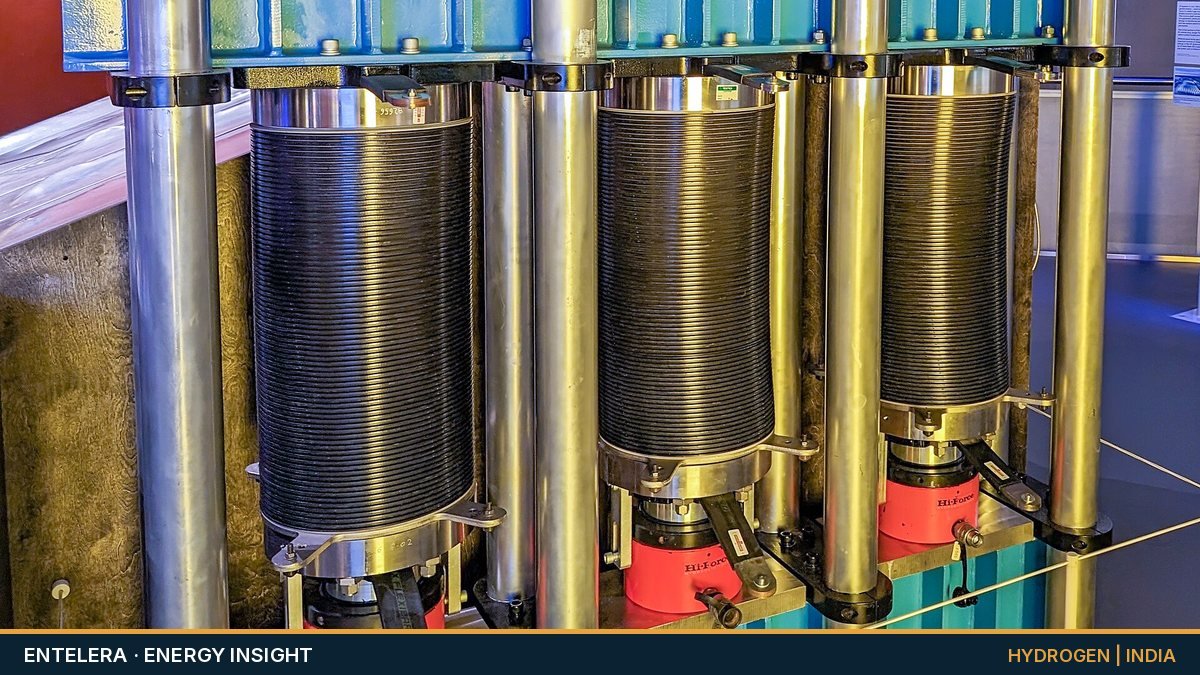
The plant will run entirely on renewable power. First, electrolysers will split water to make green hydrogen. Then the Haber-Bosch process will turn that hydrogen into ammonia. For this step, Germany’s Thyssenkrupp Uhde has designed an ammonia loop with a capacity of 2,200 tonnes a day.
In addition, ACME says the plant meets the European Union’s rules for renewable fuels of non-biological origin (RFNBO). CertifHy, an accredited certification body, has checked the power set-up against those rules. That matters because the EU requires a close match between renewable generation and use.
Who will buy the ammonia
Much of the output is already sold. Under India’s SIGHT scheme, 370,000 tonnes a year will go to Indian fertiliser companies through the Solar Energy Corporation of India (SECI). Moreover, Japan’s IHI Corporation will take 83,000 tonnes under Japan’s Long-Term Decarbonisation Power Auction.
That leaves about 307,000 tonnes a year for other buyers. According to ACME, it has long-term offtake commitments from customers in India, Japan and the EU.
“The final investment decision on our Odisha green ammonia project marks a critical milestone as we move from ambition to execution at scale,” said ACME chairman Manoj Kumar Upadhyay.
Brookfield backing and the wider pipeline
Funding support comes partly from Brookfield. In September 2026, the investor committed up to $600mn to ACME’s green molecule business. Brookfield’s Murzash Manekshana said that money, together with ACME’s own capital, should support more than 1.5 mtpa of projects in the near to medium term.
Meanwhile, ACME’s first plant, a 100,000-tonne green ammonia project in Duqm, Oman, is due to start soon. Separately, its Gopalpur joint venture with IHI in Odisha won a contract-for-difference certificate from Japan’s trade ministry earlier in 2026. ACME has also agreed to supply Mitsubishi Gas Chemical with 100,000 tonnes a year of green methanol from Odisha.
Why the ACME green ammonia FID matters
Crucially, ACME has locked in state-backed demand in both India and Japan. Therefore, the Odisha plant is a test of whether India can export green molecules at a competitive cost. China is also scaling up, as shown by Sinopec’s Ulanqab hydrogen project.
What to watch next
Next, watch for orders for electrolysers and renewable power, which will show how quickly building starts. Also watch whether ACME signs an EU buyer for the remaining volumes. Finally, Duqm’s start-up will show whether ACME can deliver on time.
Sources
- The Economic Times: ACME completes FID for $3.6-billion green ammonia project in Odisha
- Mint: ACME takes final investment decision on $3.6 billion Odisha green ammonia project
- Business Standard: ACME Group’s $3.6 bn green ammonia project in Odisha enters execution phase
- gasworld: ACME reaches FID on $3.6bn Odisha green ammonia project
- Entelera: Sinopec Ulanqab hydrogen project launches with an 805 km pipeline