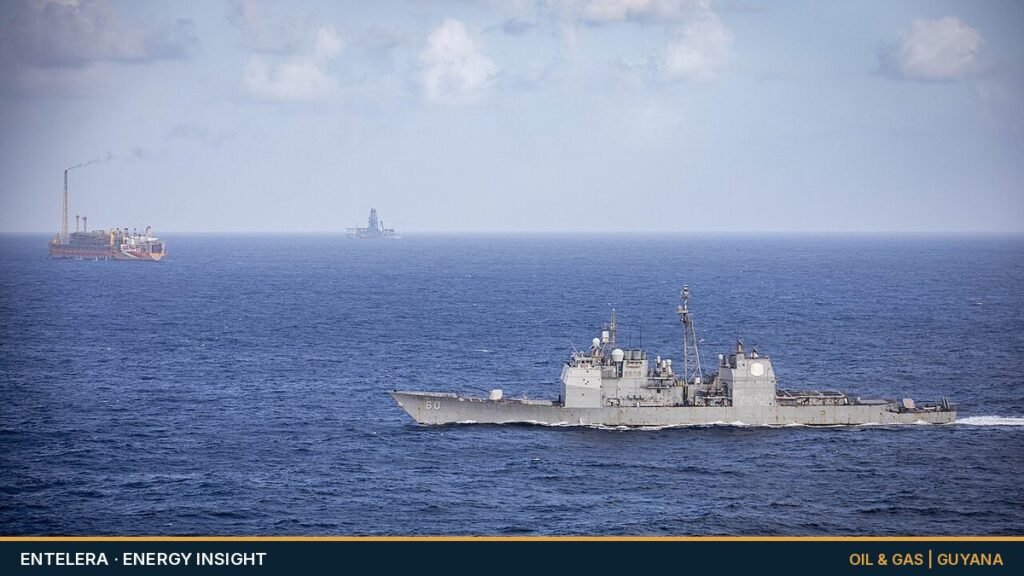
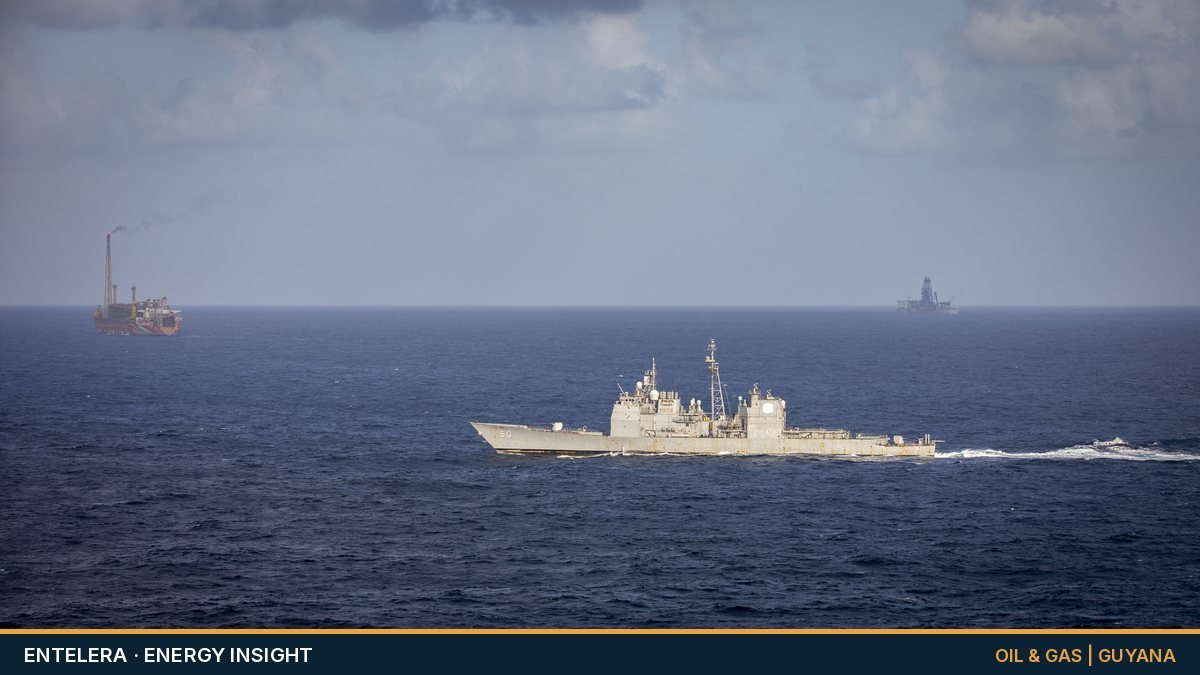
ExxonMobil has started oil production at Uaru, the fifth development on Guyana’s Stabroek block. The ExxonMobil Uaru start-up, announced on 16 November 2026, lifts the country’s installed production capacity to 1.1 mn barrels a day (mmbbl/d). First oil comes from the Errea Wittu floating production, storage and offloading (FPSO) vessel.
What the ExxonMobil Uaru start-up adds
Errea Wittu is the fifth FPSO on the block. It joins Destiny, Unity, Prosperity and ONE GUYANA. The name means “abundance” in the Warrau language. Moreover, it is MODEC’s first production facility in Guyana, and it sits about 200 kilometres offshore.
ExxonMobil expects the vessel to reach its initial capacity of 250,000 barrels a day (b/d) in the first quarter of 2027. The FPSO can store 2 mn barrels of crude. In addition, its topsides can handle up to 540 mn cubic feet of associated gas a day. They can also inject up to 350,000 b/d of water.
The development combines the Snoek, Mako and Uaru resources. In total, 44 production and injection wells will feed it from up to 10 drill centres. Guyana granted the Uaru production licence on 27 April 2023.
Capacity: 1.1 mmbbl/d, then a ramp-up
ExxonMobil presents the 1.1 mmbbl/d figure as installed capacity, not as instant output. By contrast, the government says daily crude output should rise from just over 900,000 b/d to about 1.15 mn b/d as the new vessel builds up. For now, the distinction matters. Uaru adds a fifth production system, but the 250,000 b/d rate is due only in early 2027.
Dan Ammann, president of ExxonMobil Upstream Company, called the start-up “another major milestone for Guyana and ExxonMobil”. He said Guyana has become one of the world’s fastest-growing new sources of energy supply in just over a decade.
Partners and local spend after the ExxonMobil Uaru start-up
ExxonMobil Guyana operates the block with a 45% interest. Hess Guyana Exploration, now part of Chevron, holds 30%. CNOOC Petroleum Guyana holds the remaining 25%. Since 2015, the co-venturers have spent more than $3.9bn with Guyanese vendors.
The vessel’s two-million-barrel storage and high gas-handling rate should also help operations on a block that already has four oil FPSOs. In addition, the ExxonMobil Uaru start-up gives Guyana a fifth export stream just as Atlantic sweet crude balances are tightening and loosening by turn. For now, though, the key figure remains the 250,000 b/d ramp in the first quarter of 2027.
What to watch next
The start-up follows last week’s ExxonMobil Longtail FID, the eighth Stabroek project and Guyana’s first gas development. First, watch whether Errea Wittu reaches 250,000 b/d in the first quarter of 2027. Then look at how quickly Guyana’s actual exports catch up with the new installed capacity. Finally, Longtail remains due in 2030, so Uaru is the next big step in the oil phase, not the gas phase.
Sources
- ExxonMobil: ExxonMobil starts production at Uaru, raising Guyana’s installed capacity to 1.1 million barrels per day
- Department of Public Information Guyana: Press Release: Guyana’s 5th FPSO hits first oil
- World Oil: ExxonMobil starts Uaru production, lifting Guyana capacity to 1.1 MMbpd
- MODEC: ExxonMobil and MODEC celebrate First Oil milestone of FPSO Errea Wittu
- Entelera: ExxonMobil Longtail FID: $12.5bn go-ahead for Guyana’s first gas project