The Trump administration pushed Venezuela and Iraq to consider leaving OPEC earlier this year, Reuters reported on 27 November 2026. Ten people familiar with the matter said Washington also stopped Venezuela paying its annual membership dues. Both countries are among OPEC’s five founding members. As a result, the report lands just two days before OPEC+ ministers meet to set output policy for 2027.
US officials wanted more oil production and investment in both countries, according to the people. However, some worried that OPEC limits could one day get in the way. Representatives for OPEC, Venezuela, Iraq and Saudi Arabia did not respond to Reuters’ requests for comment.
How Washington pushed Venezuela towards leaving OPEC
Nicolás Maduro was ousted in January 2026. Soon after, the State Department opened talks with Venezuelan officials in Washington about leaving OPEC, five people said. In particular, President Donald Trump wanted US oil majors to revive Venezuela’s output, and he worried that OPEC decisions could slow that plan.
The pressure went further than talk. Washington now controls Venezuela’s state funds, which sit in a US-controlled account set up after Maduro’s removal. According to the people, the US used that control to block the country’s OPEC membership fee. One person said Washington argued the money could go to “more important matters”.
Then Saudi Arabia stepped in. Crown Prince Mohammed bin Salman intervened in the summer of 2026 and persuaded the administration not to press the issue further, two people said. Later, in August 2026, Trump said it was up to Venezuela whether to leave the group.
For its part, the State Department did not say whether it had blocked the fee. Instead, an official said it reviews Venezuela’s requests “against a list of approved and prohibited uses” of the funds. The official also said lower-level officials may have raised OPEC with Caracas, but that “it has not been among the issues raised by high-level officials.”
Iraq weighed leaving OPEC, then chose a quota fight
In Baghdad, the talk of leaving OPEC followed a similar path. US officials held talks with Prime Minister Ali Faleh al-Zaidi in the summer of 2026 and encouraged an Iraqi exit, two people said. At the time, ExxonMobil and Chevron were planning major new investments in the country.
Al-Zaidi then raised the idea at a government meeting. However, Iraq’s oil ministry pushed back. It persuaded him to stay in OPEC and instead consider seeking a higher production quota. Still, the issue could return, because some parts of Iraq’s ruling coalition favour leaving OPEC and OPEC+, the people said.
By contrast, the State Department said its talks with Baghdad “have focused on improving energy infrastructure to increase production and transportation of energy, not OPEC.” Moreover, there is no sign that Washington tried to block Iraq’s OPEC dues.
The financial leverage behind the pressure
Washington holds strong cards in both capitals. Since the 2003 Iraq war, Iraq’s oil revenues have passed through an account at the Federal Reserve Bank of New York. That structure is still in place. Earlier this year, the US also threatened to cut off Iraq’s oil money unless Baghdad reduced Iran’s influence in its government.
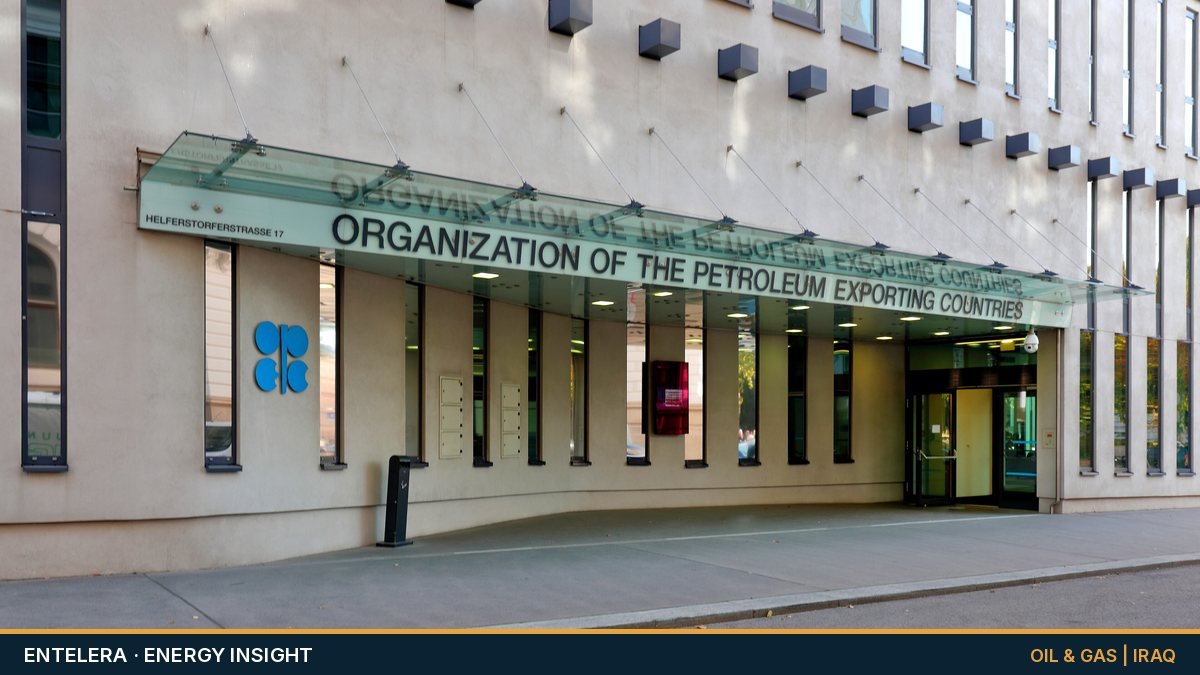
The dues themselves are small. OPEC members usually pay in the first quarter, and the fee covers staff, research and travel at the Secretariat in Vienna. Unlike UN dues, OPEC splits the cost equally, at around €2.8mn ($3.08mn) per member. Nevertheless, paying it signals continued membership. Two OPEC sources said the group is not planning to expel Venezuela over the unpaid fee.
An organisation that keeps shrinking
The report adds strain to a group that has already lost four members since 2019. Qatar left in 2019, Ecuador in 2020 and Angola in 2024. Then the UAE announced its exit earlier this year, frustrated by production caps. Reuters found no sign the US played a part in those exits. Today OPEC has 11 members. “The risk of OPEC fracture is rising,” said Dan Alamariu, chief geopolitical strategist at Alpine Macro.
What it means for OPEC+ cohesion and the quota talks
In our view, the report matters more for OPEC+ politics than for supply. First, Venezuela’s barrels sit outside the quota system already. The country pumped about 1.2 mmbbl/d in September 2026, according to OPEC figures. In addition, OPEC last set it a quota in 2017-2018, at around 2 mmbbl/d. A source familiar with its OPEC position said a return to quotas is unlikely until output gets back there. So Venezuela leaving OPEC would change little in the short term. PDVSA’s target of 1.5 mmbbl/d by the end of 2027 still sits well below that level.
Iraq is a different matter. Its current OPEC+ limit is 4.431 mmbbl/d, and Baghdad is already fighting a capacity review it says is too low, as we reported in our story on the Iraq OPEC capacity row. Therefore, the news that its prime minister weighed an exit gives Baghdad a stronger hand in Sunday’s talks. If Iraq left, its barrels would no longer sit under a group cap. For a fuller view of the Basrah angle, see our analysis of OPEC+ quotas and Iraq’s capacity fight.
For traders, the risk is a slow loss of discipline rather than a sudden flood of oil. Brent settled at $96.57 a barrel on 26 November 2026, as Middle East disruption still dominates prices. Over time, however, a weaker OPEC+ makes coordinated cuts harder to deliver if a surplus builds.
What to watch next
First, OPEC+ meets on Sunday 29 November 2026. Two sources told Reuters the group will likely keep output targets for at least Q1 2027, partly because some members dispute the first ever capacity review. Next, watch whether Iraq wins a higher figure, or whether exit talk returns in Baghdad. Finally, watch whether Caracas pays its 2027 dues in Q1 2027. That would show whether talk of leaving OPEC has really faded.
Sources
- Investing.com (Reuters): Exclusive-US pushed Venezuela, Iraq to consider leaving OPEC, sources say
- The Straits Times (Reuters): US pushed Venezuela, Iraq to consider leaving OPEC, sources say
- Al-Monitor (Reuters): Exclusive-US pushed Venezuela, Iraq to consider leaving OPEC, sources say
- Dawn (Reuters): Opec+ likely to roll over oil output targets for Q1 as capacity disputes persist, sources say
- CNA (Reuters): Brent settles higher as mine strikes, refinery attack stoke Middle East supply concerns
- OilPrice.com: Iraq Refuses to Accept OPEC+ Assessment of its Production Capacity