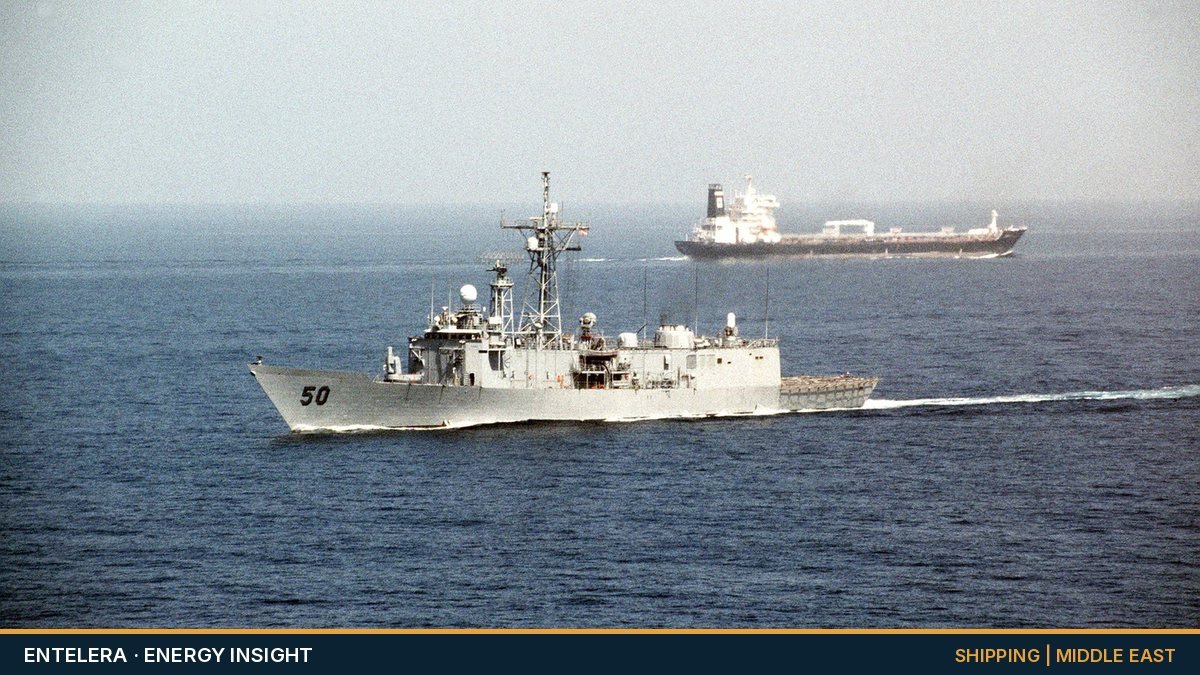
Strait of Hormuz mines struck again, according to Iran. Late on 23 November 2026, the Revolutionary Guards (IRGC) navy said three more oil tankers hit naval mines. It said they suffered a “severe explosion and fire”. Crucially, the Guards said the ships sailed under extensive US air cover and escort. The claim follows the two supertanker hits we reported on 23 November 2026.
What Iran says about the Strait of Hormuz mines
According to the IRGC statement carried by IRNA, one blast hit a tanker near the southern coast. The other two blasts came in the eastern part of the strait. “U.S. military cover and escort will not replace compliance with maritime regulations,” the Guards added.
In total, Iran now claims five tankers hit by mines in two days. Two supertankers stopped after blasts north of Oman’s Ghanam Island a day earlier. However, Tehran has not named any of the ships. Nor has it given details of damage or injuries.
Iran has repeatedly warned ships to use only the northern lane, which it treats as the safe route. Meanwhile, it attacks or threatens ships that use routes closer to Oman.
UKMTO points to projectiles, not Strait of Hormuz mines
The British agency UKMTO tells a different story. On Tuesday, it said unidentified projectiles struck three vessels on Monday as they sailed east through the strait. All three continued their voyages, and UKMTO said it had accounted for all crew.
Earlier, UKMTO linked several incidents near Khasab, on Oman’s Musandam Peninsula, to projectiles. On 20 November 2026, a tanker caught fire 8 nautical miles north of the port. The next day, an outbound tanker took a hit to its stern about 11 nautical miles north. Another took a hit to its engine room 17 nautical miles east. So far, it remains unclear whether these are the same ships Iran says hit its mines.
Sanctions and cyberattacks raise the pressure
Meanwhile, Washington tightened the financial squeeze. On Monday, the US Treasury sanctioned more than two dozen Iranian exchange houses, front companies and key personnel. The action is part of “Operation Economic Outcast”, which Treasury Secretary Scott Bessent launched on 24 August 2026. Bessent called Iran’s shadow banking system “the last financial lifeline of a bankrupt regime”.
In addition, the US is investigating Iran over cyberattacks on as many as 50 ships, The Wall Street Journal reported. The vessels carried oil, LPG, chemicals and other hazardous cargo. At sea, the USS Theodore Roosevelt joined two other carriers last week to enforce the US blockade of Iranian ports.
What Strait of Hormuz mines mean for oil and freight
Still, crude traders are looking past the headlines. Brent dipped to $89.2 a barrel on Tuesday as Gulf supply recovers. WTI fell to $80.1, far below its October high near $105. Yet by 14:38 GMT, Brent had bounced 1.3% to $90.55 on the shipping threats. For the wider move, see our Brent oil price update for today.
Gregory Brew of Eurasia Group expects Brent to stay in the lower half of an $80-100 range. However, he warned that heavier Iranian attacks could reverse the easing trend. For shipowners, the bigger cost is risk. If escorts offer no guarantee, war-risk premiums and freight for Gulf liftings should stay high.
What to watch next
First, watch for UKMTO or owners to confirm any hits on escorted ships. Second, watch whether Washington changes escort routes or rules of engagement. Finally, more sanctions rounds could push Iran to test the blockade line again.
Sources
- CNBC: Iran says three tankers hit mines in Hormuz despite U.S. escort, as Treasury widens sanctions
- Marine Insight: Iran Claims 5 Oil Tankers Hit Mines In Strait Of Hormuz In 2 Days As UKMTO Reports Projectile Strikes
- Tasnim News Agency: Three More Tankers Hit by Naval Mines in Strait of Hormuz
- CNBC (Reuters): Oil rebounds from three-month lows on Hormuz threats
- U.S. Department of the Treasury: Operation Economic Outcast Disrupts Iran’s Global Shadow Banking Networks