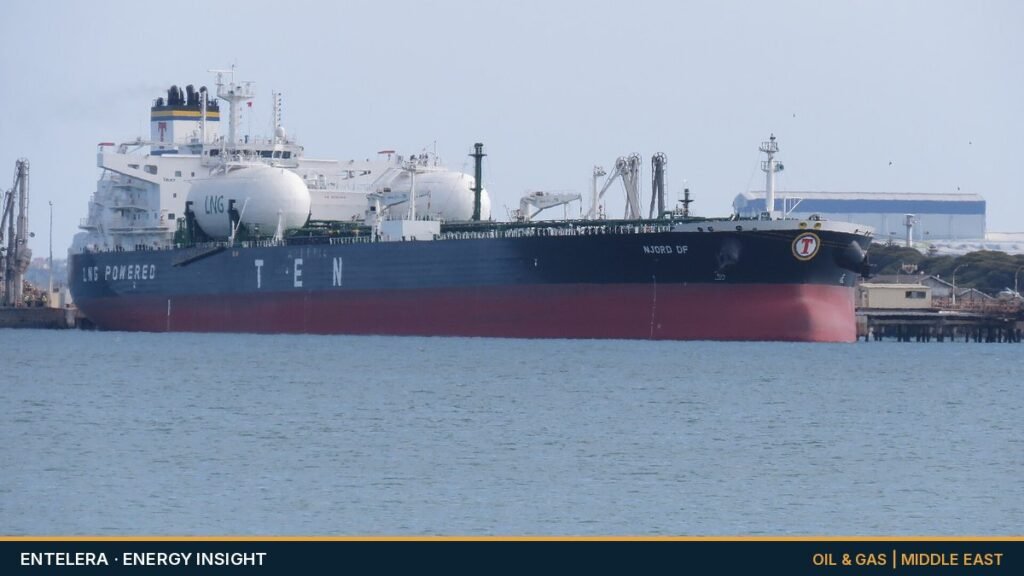
Indian Oil shipping strategy is changing as the Gulf crisis drives up freight. Indian Oil Corporation (IOC), India’s largest refiner, plans to buy its own crude oil and LPG carriers. The board has already approved the purchase of a few vessels, and IOC issued tenders several months ago, finance director Anuj Jain said on the company’s second-quarter earnings call.
“The country needs oil sector companies to focus more on the shipping area now,” Jain said, PTI reported. In addition, IOC is exploring building ships in India under the government’s Make in India initiative.
Why Indian Oil shipping costs matter
Freight is the main driver. Currently, IOC has three crude oil vessels and nine LPG vessels on time charter. Those deals have delivered big savings during the crisis, Jain said.
The gap is wide. IOC’s time-chartered crude carriers cost around $2-2.50 a barrel. By contrast, spot rates have reached as much as $8-10 a barrel. On our calculation, spot freight now costs roughly four times the charter rate.
LPG shipping shows the same pattern. Normally, LPG freight costs around $40 a tonne. However, spot rates have climbed to $160-180 a tonne, Jain said. Shipping disruption near the Strait of Hormuz has also pushed up war-risk insurance, as we explained in our analysis of oil shipping costs and insurance in Hormuz.
Three options on the table
Historically, IOC relied on a mix of time-chartered and voyage-chartered ships. Now, it is weighing three approaches. First, it can optimise its existing charter deals. Second, it can own ships. Third, it can support domestic shipbuilding.
A shift in crude sourcing
The shipping plan is part of a wider push to diversify supply. In the first half of FY2026-27, Russia supplied 55% of IOC’s crude. Meanwhile, the Middle East provided 24%. Africa contributed about 10%, while Brazil supplied 7%. The US accounted for 2-5%, and Venezuela 3-4%.
IOC also leaned much more on the spot market. Spot imports made up about 87% of crude sourcing in the first half of FY2026-27. That compares with around 50% in the previous financial year.
Pricing has eased too. In the September 2026 quarter, IOC paid between a $5 discount and a $12 premium to benchmark crude. In the preceding quarter, that range ran from zero to an $18 premium.
Prices, stocks and profits
Crude costs have soared since the war began. The Indian basket averaged around $65-70 a barrel in February 2026, Jain said. Then it stayed above $100 for much of the first quarter and averaged about $120 in October 2026.
To guard against disruption, IOC raised crude inventories to about 39 days, from its usual 33-35 days. It also holds 20 days of LPG and 23-25 days of petrol and diesel.
Financially, IOC is in a strong position. It reported net profit of INR216.3bn ($2.28bn) for the September 2026 quarter, up from INR76.1bn ($804mn) a year earlier. Its gross refining margin was $18.52 a barrel, excluding the special additional excise duty.
What to watch for Indian Oil shipping
Next, the market will watch the size and type of vessels IOC buys and whether Indian yards win orders. Jain also warned that geopolitics remains a key risk for crude sourcing, freight and marketing margins.
Sources
- Economic Times (PTI): IOC to buy crude, LPG ships as West Asia crisis exposes shipping risks
- The Hindu (PTI): IOC to buy crude, LPG ships as West Asia crisis exposes shipping risks
- The Times of India: Indian Oil plans to buy its own oil, LPG ships as freight costs surge 4 times
- Entelera: Oil shipping costs: OPEC, IEA and insurance in Hormuz