
India has set zero sugar diversion for ethanol in the 2026-27 supply year. The oil marketing companies’ latest tender sets out the decision. As a result, the long-running food-versus-fuel debate has become a working policy choice. The decision also puts grain and C-heavy molasses at the centre of the blending programme for the next 12 months. Overall, the lesson is simple: an energy security tool is only as secure as the feedstock behind it.
What the tender says about sugar diversion for ethanol
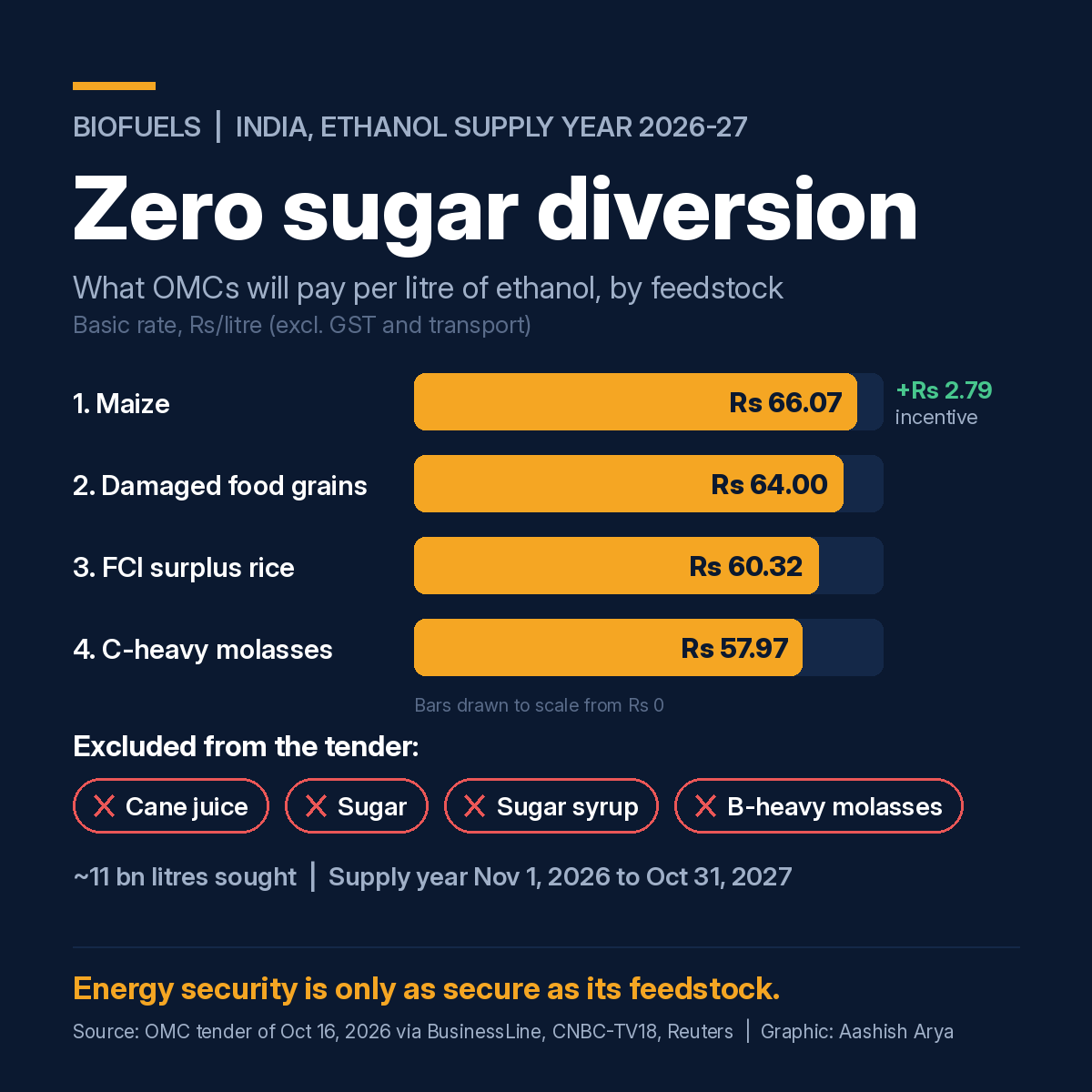
Five state-run oil companies issued a quantity bid tender dated 16 October. It seeks around 1,100 crore litres (about 11 billion litres) of denatured anhydrous ethanol. Supply runs from 1 November 2026 to 31 October 2027.
The five companies are Indian Oil Corporation, Bharat Petroleum Corporation, Hindustan Petroleum Corporation, Mangalore Refinery and Petrochemicals, and Numaligarh Refinery.
The tender document is direct. “Government of India (GoI) has issued directions that sugar diversion for ethanol be reduced to zero for ESY 2026-27,” it states, quoted by BusinessLine. Therefore, the companies seek no offers for ethanol made from sugarcane juice, sugar, sugar syrup or B-heavy molasses.
Meanwhile, Reuters, via The Economic Times, said the exclusion underscores a growing tension. On one side is the goal of cutting oil imports. On the other is protecting domestic sugar supplies. This matters because poor rainfall threatens output and is pushing sugar prices to record highs.
The rates: maize gets the top price
The tender lists basic procurement rates by feedstock. In addition, GST and transport charges are payable on top of these rates.
- Maize: ₹66.07 per litre, plus an incentive of ₹2.79 per litre (excluding GST)
- Damaged food grains: ₹64.00 per litre
- Surplus rice from the Food Corporation of India (FCI): ₹60.32 per litre
- C-heavy molasses: ₹57.97 per litre
Ethanol from other feedstocks permitted under the National Policy on Biofuels earns the lowest prevailing rate, CNBC-TV18 reports.
Including the incentive, maize earns ₹68.86 a litre. That is about ₹10.89 more than C-heavy molasses. In other words, this spread is the tender’s clearest signal of where the volume should come from.
Quarterly volumes: a front-loaded year
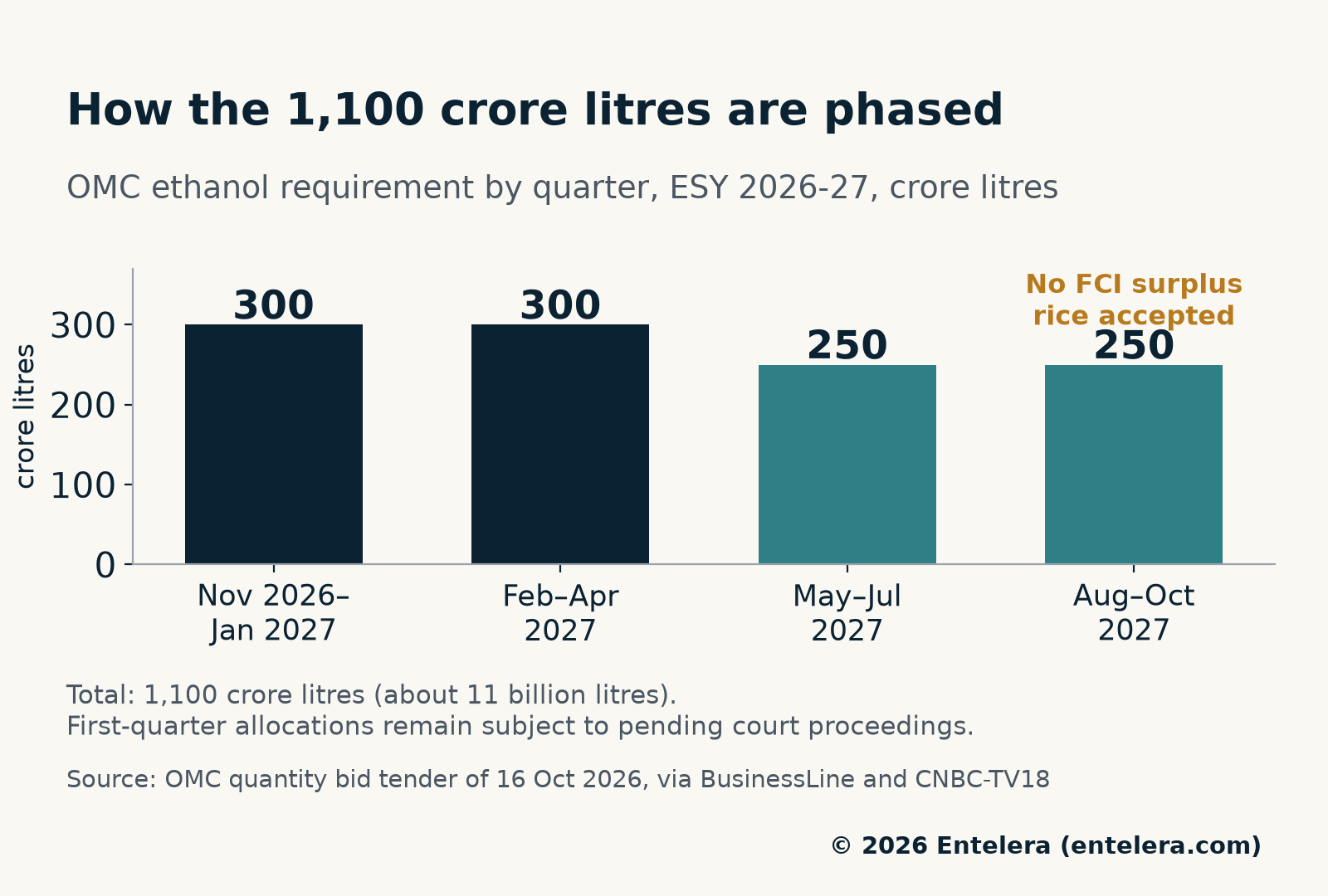
The oil companies also split the volume by quarter. BusinessLine reports 300 crore litres in each of the first two quarters, November to January and February to April. The last two quarters, May to July and August to October, need 250 crore litres each. However, the tender will not accept offers using FCI surplus rice for the fourth quarter.
Why zero sugar diversion for ethanol matters
For years, India relied on surplus sugar to meet its ethanol-blending targets. In good harvest years, this worked well. Diverting cane juice and syrup to distilleries supported mill finances and absorbed surplus. It also displaced imported petrol.
However, the feedstock was always a food crop that depends on the monsoon. A poor rainfall year flips the logic. Then sugar becomes scarce and retail prices rise. As a result, every tonne sent to fuel becomes a food-inflation question. In short, the 2026-27 tender shows the government choosing food security over blending flexibility for this cycle.
Poor rainfall has turned an energy security tool into a food-inflation risk. Energy security is only as secure as its feedstock.
Winners, losers and the fine print
Mills built around cane juice and syrup lose that route for this supply year. Distilleries that relied on direct juice or B-heavy molasses must switch feedstock, where their plants allow it. Otherwise, they must accept lower utilisation.
By contrast, grain-based distillers gain relative ground. Maize carries the top rate plus an incentive, and damaged food grains rank second.
Meanwhile, C-heavy molasses, the final by-product of sugar production, stays eligible. So mills can still supply ethanol, but only from the residue left after sugar production.
CNBC-TV18 reported three further clauses that deserve attention:
- First-quarter allocations remain subject to the outcome of pending legal proceedings over the oil companies’ ethanol allocation methodology. The companies have reserved the right to revise, reduce, withdraw or cancel allocations in line with court orders.
- Suppliers must produce ethanol from eligible domestic feedstocks at their own registered or approved distilleries. The tender does not allow trading, or sourcing ethanol from third parties for onward supply.
- The restrictions apply to procurement under this tender for the 2026-27 supply year.
This last point matters for investors. This is a supply-year decision, not a permanent ban. Sugar-based routes could therefore return if harvests recover. However, the episode shows that the government can switch the policy off at short notice.
The oil-price context
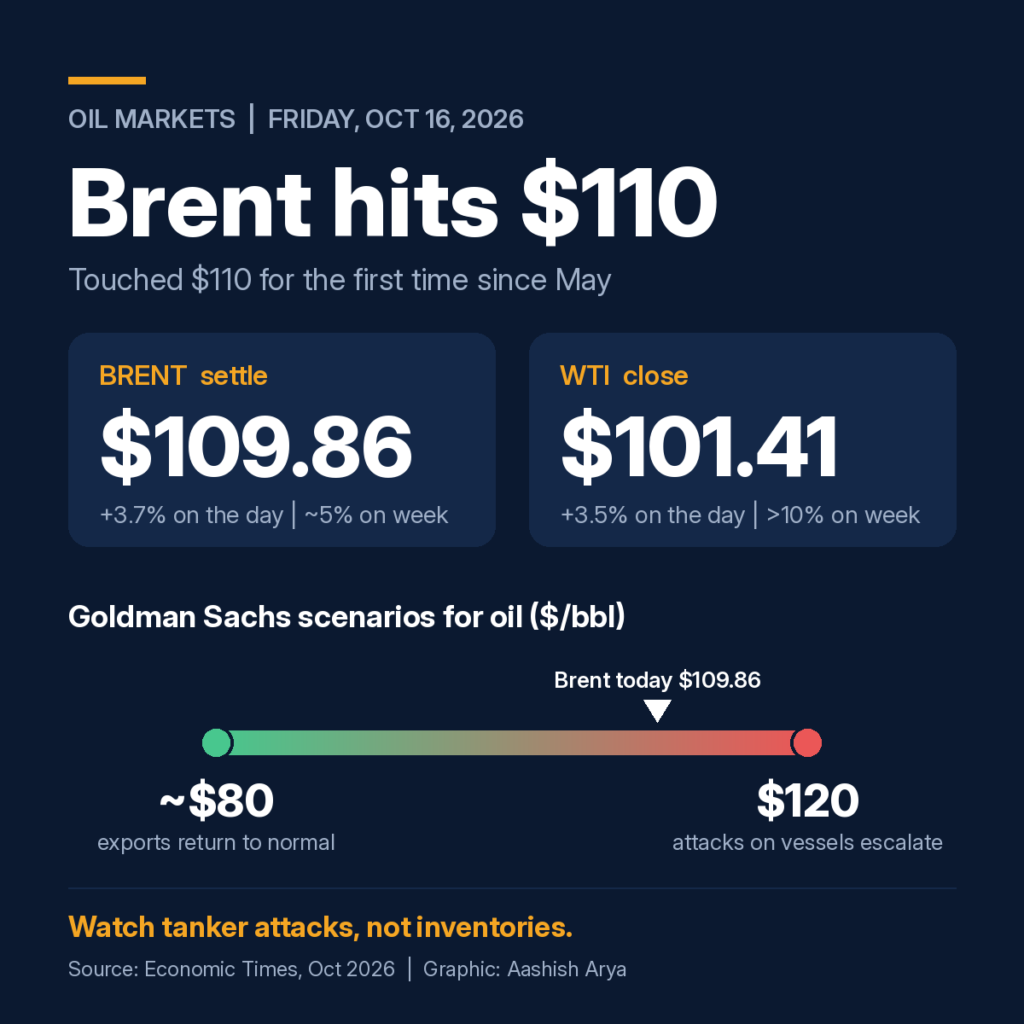
The timing is awkward. Brent crude settled at $109.86 a barrel on 16 October, the same day as the tender date. That came after Brent touched $110 for the first time since May. Our analysis of Brent at $110 also explains what drove the move.
When crude is expensive, each litre of ethanol that displaces petrol saves more foreign exchange. So restricting feedstock at precisely this moment carries a real cost. Even so, the government has accepted that cost to protect sugar supply.
What zero sugar diversion for ethanol means next
India: As a result, the blending programme now depends far more on grain. However, that raises its own questions. For example, maize demand from distillers competes with feed and food uses. In addition, FCI rice availability is a policy variable in its own right, as the fourth-quarter exclusion already shows. Spreading feedstock risk across sugar, grain and residues is more resilient than relying on any single crop.
Second-generation ethanol: The episode also strengthens the case for feedstocks that do not compete with food. These include crop residues and agro-industrial waste, and the National Policy on Biofuels already permits many of them. The tender’s catch-all category for other permitted feedstocks keeps that door open, though at the lowest prevailing rate.
Global markets: Whenever India restricts sugar use for fuel, attention turns to its sugar balance. Attention then turns to world sugar markets. The tender itself is about domestic supply. Still, the direction of policy is clear: domestic food prices come first.
Europe and the US: Similarly, biofuel mandates elsewhere face the same structural question. This is because crop-based fuel policy ties energy security to harvest outcomes. As a result, a weather shock can force a trade-off at the worst possible moment, when oil is expensive.
What to watch next
- Tender response by feedstock: whether grain and C-heavy molasses offers can fill the 1,100 crore litre requirement.
- Court proceedings on the allocation methodology, which affect first-quarter volumes.
- Official sugar output estimates for the 2026-27 season. These will show whether the restriction is likely to ease.
- Maize prices and availability, as distillers compete for grain.
- Any policy push on second-generation ethanol to reduce dependence on food crops.
The strategic question is whether India should build its blending programme around sugar at all. The alternative is a broader mix of grain, residues and second-generation feedstocks. Such a mix could absorb a weak monsoon without another reversal on sugar diversion for ethanol.
Sources
- Reuters via The Economic Times, “India sets zero sugar diversion for ethanol in 2026/27 tender”, 16 October 2026: economictimes.indiatimes.com
- BusinessLine, “No sugar diversion for ethanol production: Govt to OMCs”, 17 October 2026: thehindubusinessline.com
- CNBC-TV18, “India bars sugarcane juice, syrup-based ethanol in 2026-27 tender; OMCs seek 1,100 crore litres”, 17 October 2026: cnbctv18.com
- The Economic Times (ETMarkets), Brent settlement on 16 October, 17 October 2026: economictimes.indiatimes.com